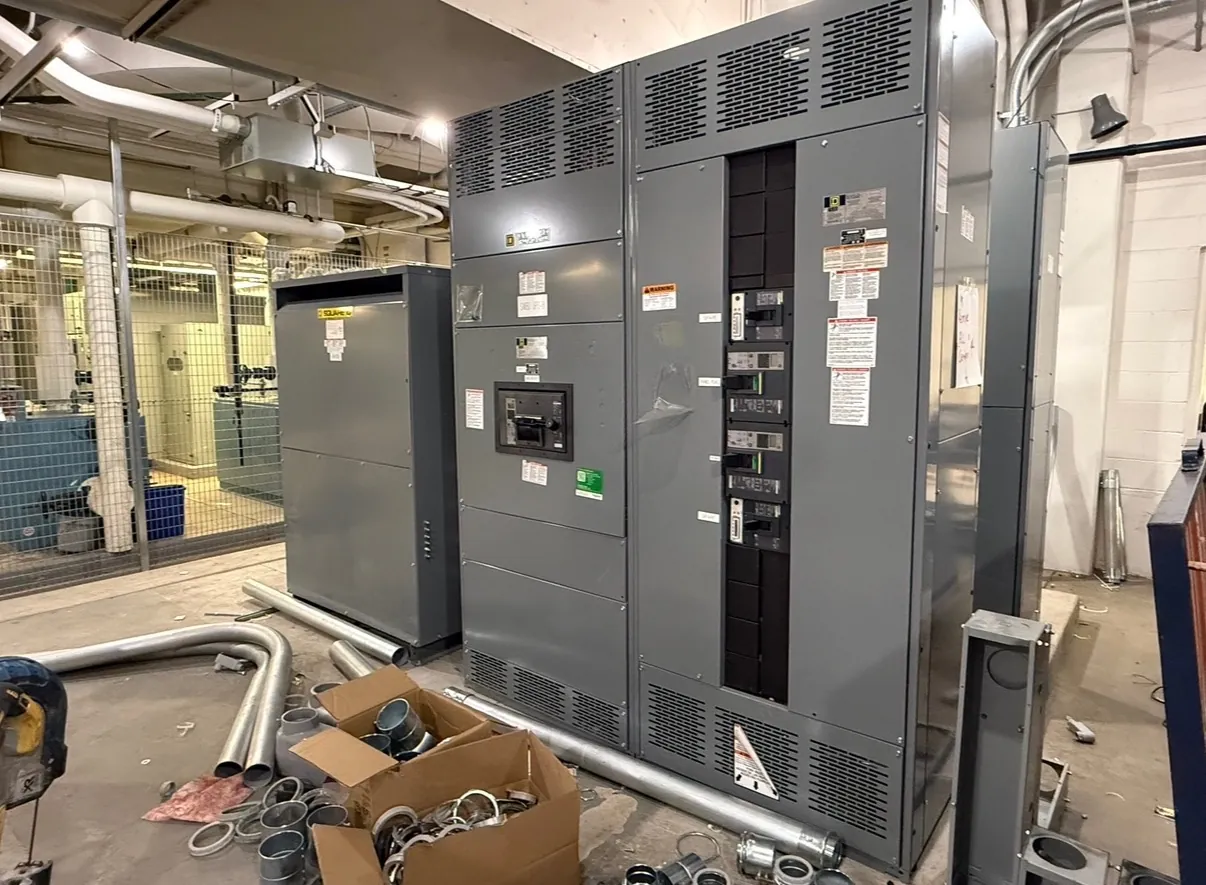
Switchgear Testing: What Nevada Project Teams Should Expect
Testing is not one universal procedure applied identically to every switchgear assembly. The applicable checks depend on the equipment type, construction, ratings, control scheme, specified standards, and project requirements. A custom low-voltage switchboard, for example, does not necessarily follow the same inspection and test program as medium-voltage equipment. Before ordering, ask the manufacturer for the inspection and test plan (ITP) proposed for the specific equipment, including what will be checked, what records will be provided, and whether any customer witness points are available.
It is also important to distinguish design or type testing from routine factory checks. Design verification concerns whether a design or product construction has been evaluated for applicable requirements; routine checks examine the particular assembly being built. Neither term by itself tells you exactly which tests are included. Request the plan and confirm its scope against the purchase specification rather than assuming that a test was performed because it is common in the industry.
Design Verification and Type Tests Apply to a Design
Design or type tests evaluate representative equipment or a design configuration under defined conditions. Depending on the product and applicable requirements, the design evaluation may address matters such as temperature performance, dielectric withstand, short-circuit performance, or construction details. These evaluations are not necessarily repeated on every manufactured assembly. Their applicability depends on whether the equipment being supplied matches the evaluated design and on the governing standard and product category.
For low-voltage switchboards, UL 891 may be relevant when specified and applicable. It does not cover every kind of switchgear, and it should not be treated as a blanket statement about medium- or high-voltage equipment, busway, or all assemblies. A product’s voltage, current, interrupting and withstand ratings are distinct characteristics, and a rating alone does not establish that a particular assembly is listed or that a design test applies. Confirm the exact product scope, markings, ratings, and listing status with the manufacturer for the quoted configuration.
Routine Factory Checks Examine the Specific Assembly
Routine production checks are performed on the equipment built for the order, as defined by the applicable requirements and agreed ITP. Depending on the assembly and specification, these may include a visual and mechanical inspection, verification of nameplates and component identification, examination of wiring and connections, and checks of control or indication functions. A plan may also call for electrical checks such as continuity or insulation-related measurements. The method, acceptance criteria, and documentation should be identified in the plan; do not assume every item is included on every product.
Where the design includes circuit breakers, protective devices, metering, interlocks, or customer control interfaces, the factory program may include appropriate checks of their specified functions and connections. Those checks do not substitute for system-level engineering, final field coordination, or commissioning at the installation. Protection settings and the relationship between equipment and the facility’s power system require qualified engineering review and site-specific information.
Agree on Scope, Witness Points, and Records Before Release
An ITP is most useful when it is reviewed before fabrication, not after the equipment is ready to ship. It can identify inspection stages, test methods, acceptance criteria, required records, and any customer or third-party witness or hold points. Witnessing should be scheduled and defined in advance; availability, notice, and the treatment of a missed witness point should be settled in the project documents. A witness opportunity does not itself mean the equipment has passed a test or has a particular listing.
Ask what records will accompany the order. Depending on the agreed scope, documentation may include inspection records, test results, equipment identification, or applicable product documentation. Clarify the format, language, number of copies, and whether records are delivered with the equipment or separately. If the project requires a particular test, report, witness step, or submittal, state it explicitly in the specification and have the manufacturer confirm feasibility and scope in writing.
Provide the Details Needed for a Useful Test Plan
For a quotation, provide the equipment type and intended application, system voltage, required ratings, one-line diagram, protective-device and metering requirements, control schematics, and applicable project specifications. Include the governing standards and any owner, engineer, or facility requirements for inspection, testing, witness points, and documentation. Identify interfaces with generators, transformers, transfer equipment, building controls, or other switchgear where they affect the assembly or its functional checks. The manufacturer can then identify questions and propose a project-specific plan rather than relying on assumptions.
Design changes made during engineering can affect what was evaluated and what checks are appropriate. Confirm how approved deviations, substituted components, and final drawings will be reflected in the inspection and test documentation. Ratings, listings, and test scope require confirmation for the final configuration; they should not be inferred from a preliminary drawing or a similar product.
Coordinate Factory Testing with Nevada Site Conditions
Factory checks are not a replacement for installation review. For a Nevada facility, discuss the destination, receiving constraints, access, unloading arrangements, and any environmental or enclosure requirements that may affect the specified equipment. Shipping is available nationwide, but transport and site conditions should be coordinated with the project schedule and installation plan. After delivery, qualified professionals must verify the installed equipment and its interfaces in the context of the actual facility.
As a U.S. manufacturer building new custom power-distribution equipment with all-American components, we can review the requested inspection and test plan during quotation and engineering. Ask for the proposed scope for your specific assembly, including applicable routine checks, any relevant design-verification information, and the records to be supplied. That conversation helps align expectations without treating a general test list as a guarantee for every product or project.