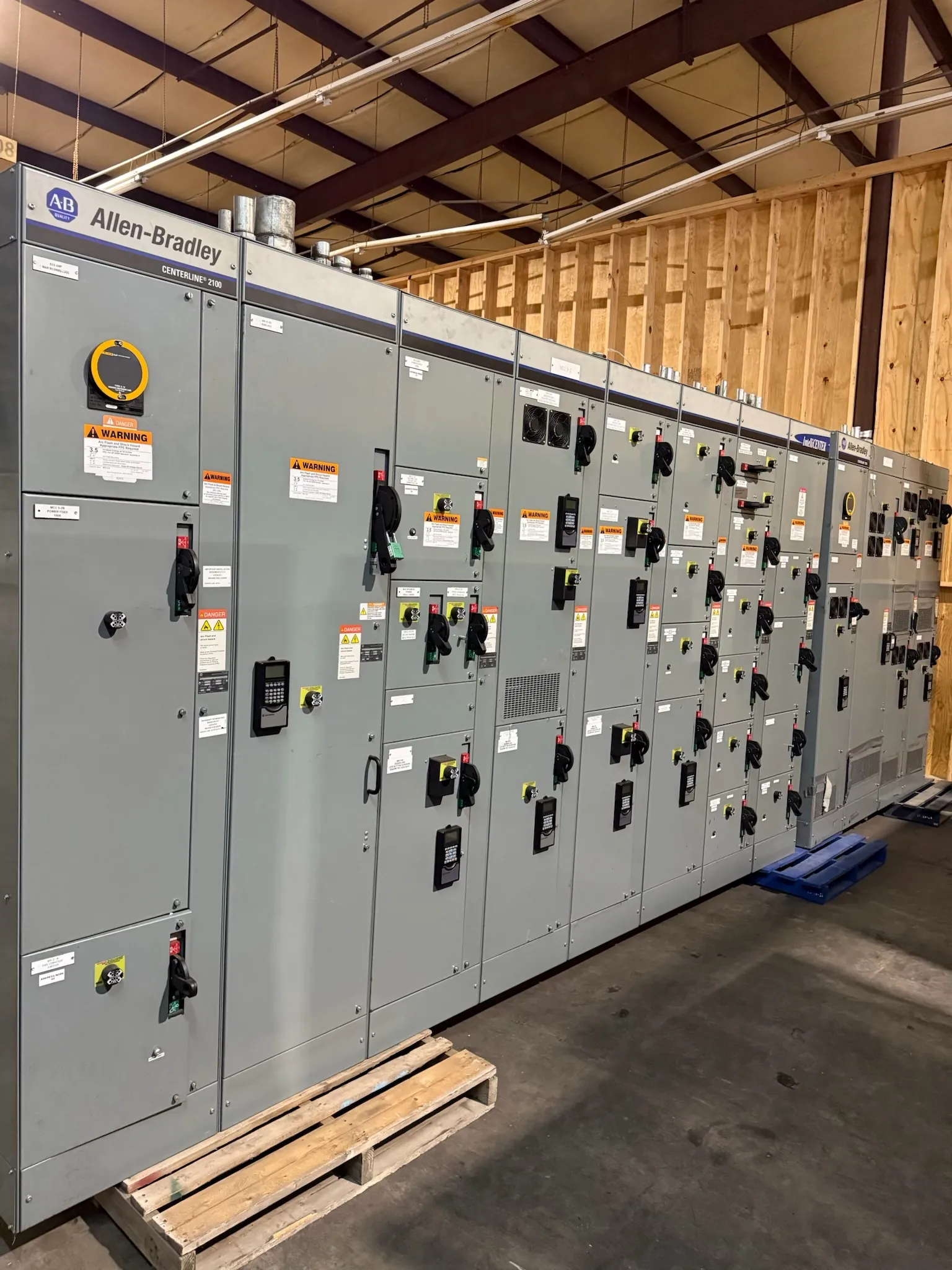
Where Nevada Buyers Can Source New Switchgear
Nevada facility owners, contractors, and engineering teams can source new switchgear directly from equipment manufacturers that build to project requirements. For a custom package, the manufacturer should be able to review the intended application, define the equipment scope, and identify which ratings and construction details need confirmation before quotation. Buying directly from a manufacturer can also make it easier to discuss design choices and interfaces with the team responsible for producing the equipment.
Our company manufactures new custom switchgear and power-distribution equipment in the United States, using all-American components, and ships nationwide, including to Nevada. We sell manufactured equipment to customers; we are not a broker. A Nevada destination does not by itself establish that a product is suitable for a particular facility. Suitability depends on the electrical design, site conditions, applicable project documents, and review by qualified professionals.
Start With the Electrical Application, Not a Product Label
“Switchgear” can refer to different equipment and voltage classes, so a purchasing request should describe the system and function rather than rely on a broad name alone. Clarify whether the scope calls for low-voltage switchboards, other low-voltage assemblies, or medium-voltage equipment, and identify the intended role: service entrance, distribution, source transfer, motor supply, or another defined use. These categories are not interchangeable, and a standard or listing associated with one product type should not be assumed to cover another.
Provide the nominal system voltage, phase and wire arrangement, available fault-current information when established, and the required continuous-current and short-circuit ratings. Ratings are equipment characteristics, not a substitute for stating system voltage or confirming compatibility. The project engineer must determine the design basis and verify that the selected equipment suits the electrical system and installation.
Compare Ratings, Construction, and Required Scope
Two quotations may describe equipment for the same project while including different components or responsibilities. Compare the lineup configuration, incoming and outgoing provisions, protective devices, metering, control features, enclosure details, and any specified accessories. State whether the request includes only the assembly or also items such as interconnections, documentation, or other project-specific components. Make exclusions visible so that a lower initial quote is not mistaken for an equivalent scope.
For low-voltage switchboards, UL 891 may be relevant when the project specification calls for equipment evaluated to that standard. It is not a blanket designation for all switchgear or for medium- and high-voltage equipment, busway, or every product offered. Ask the manufacturer to identify the applicable product standard and listing status for the specific quoted assembly; do not infer approval from a general product description.
Give Manufacturers a Complete Quotation Package
A useful request for quotation includes the one-line diagram, equipment schedule, specification, load and feeder information, and the project’s required ratings and accessories. If documents are preliminary, identify open decisions and the expected design stage. Include connection orientation, cable or bus entry preferences, metering and communications requirements, enclosure environment, and any constraints on footprint or access. These details can affect layout, component selection, engineering effort, and quoted scope.
Also identify the project location in Nevada, the receiving contact, delivery access, and any site restrictions already known. Facility conditions may differ between an indoor electrical room and an exposed or space-constrained installation. Temperature, dust, elevation, ventilation, seismic criteria, and available working space may matter depending on the project. The design team should establish which conditions apply; a manufacturer should not guess from the state or city alone.
Coordinate Interfaces Before Approving a Proposal
Review the quote against the latest project documents, including equipment dimensions, cable entry, bus connections, control wiring, protective-device requirements, and interface points with upstream and downstream equipment. Confirm who is responsible for settings, coordination studies, field connections, and any utility-related requirements. Those responsibilities vary by contract and project. Ratings, listing details, and utility or code requirements need confirmation for the specific application, rather than assumptions based on another installation.
Where drawings or specifications conflict, request clarification before release for manufacture. A documented exception or unresolved interface can affect engineering, price, schedule, and whether the equipment fits the intended electrical design. Qualified engineers and the project team should review the selection and site conditions before final approval.
Evaluate Price and Delivery as Part of Total Fit
Pricing depends on the defined equipment scope, ratings, components, construction, documentation, and project requirements. Comparing quotes is most useful when bidders receive the same current documents and when each proposal identifies inclusions, exclusions, assumptions, and items requiring confirmation. Ask how design changes after approval are handled and what information is needed to move from quotation to production; do not treat an estimated schedule as a guaranteed delivery date unless the proposal expressly establishes one.
For Nevada delivery, confirm the destination, unloading arrangements, receiving hours, access limitations, and any sequencing needed to match installation work. Nationwide shipment can make a U.S. manufacturer an option for Nevada projects, but transit planning and site readiness remain project-specific. Choose a supplier based on the fit between its manufactured equipment, the approved design, a clearly stated scope, and a delivery plan the project team can coordinate—not on a generic product name alone.