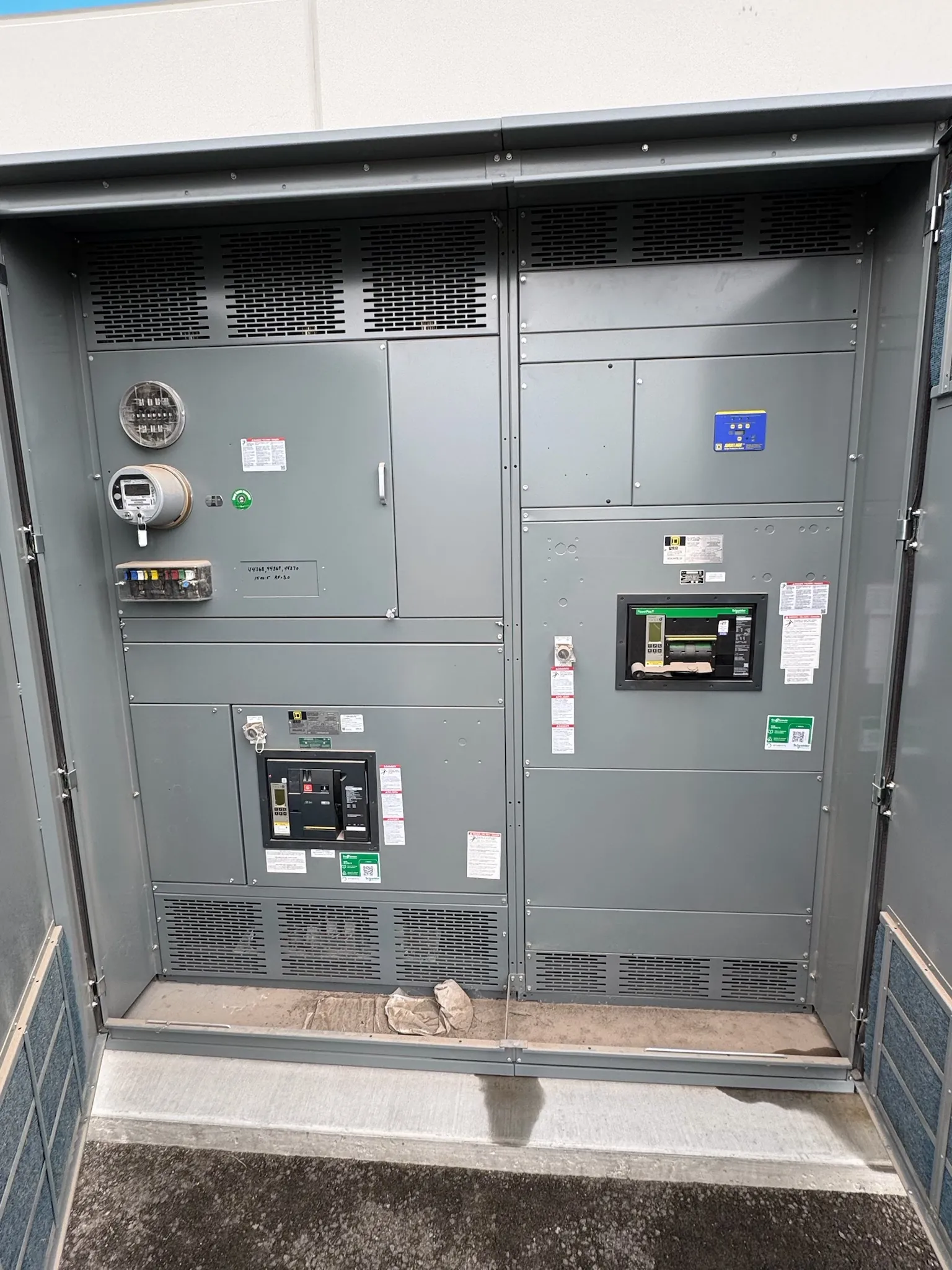
Ordering New Replacement Switchgear for an Existing Installation
Replacing switchgear in an operating facility is a fit-and-coordination project, not simply a request for a cabinet with a similar appearance. New equipment must align with the electrical system, connected conductors, protection scheme and available installation space. Existing field dimensions and nameplate information are useful starting points, but they do not by themselves establish that a proposed assembly is electrically suitable or can be installed during the planned shutdown. A replacement quotation should be based on reviewed site information and clearly identified assumptions.
We manufacture new custom switchgear and power-distribution equipment for customers in Nevada and ship nationwide. Our assemblies use all-American components and are built in the USA. The information provided at the start of a request helps determine the appropriate equipment scope, engineering review, interfaces and schedule considerations.
Document the Existing Equipment and Site Conditions
Begin with the equipment nameplate, available drawings, one-line diagram and any panel schedules or control schematics. Record the manufacturer and model, equipment type, system voltage, phase and wire arrangement where known, and the ratings shown on the nameplate. Capture overall dimensions, section widths, depth, height, cable-entry locations, conductor sizes and termination details. Photographs of the lineup, labels, conduit approaches and surrounding space can help clarify what drawings leave uncertain.
Field dimensions deserve particular attention. Measure the available footprint and the route from the delivery point to the equipment location, including doorways, corridors, stairs, overhead obstructions and turning clearances. Note floor conditions, housekeeping pads, anchorage, adjacent walls and access needed for future maintenance. These conditions can affect enclosure configuration, section arrangement, shipping splits and installation planning. If information is incomplete or conflicting, identify that early rather than treating an estimate as a verified dimension.
Confirm Ratings and the Electrical Application
Voltage is not the same as a rating such as ampacity or short-circuit withstand. A replacement assembly needs to be evaluated against the system voltage and grounding arrangement, available fault current, protective devices, feeder and branch requirements, and the intended use of the equipment. Existing labels and records may be outdated, so a qualified electrical engineer should review the system and confirm the design basis. Applicable listings and standards depend on the equipment type and configuration; UL 891 applies to applicable low-voltage switchboards, not every form of switchgear or every voltage class.
Do not assume that matching the old nameplate alone makes a new lineup interchangeable. Changes to the source, transformer, downstream loads, protection settings or utility conditions can affect the required design. Ratings, listings and project-specific details must be confirmed for the proposed assembly. Engineering review and site conditions determine whether a requested configuration is appropriate.
Resolve Interfaces Before Requesting a Firm Proposal
Replacement work often involves several connections beyond the main power conductors. Identify incoming and outgoing cable or bus connections, neutral and grounding arrangements, control power, metering, communications, interlocks and external signals. Document which devices or functions must be retained and which are changing. If existing equipment connects to other lineups, transformers, generators, transfer equipment or building controls, provide drawings and describe the interface rather than assuming the new assembly will reproduce it automatically.
Clear interface information can reveal tradeoffs. For example, matching existing cable-entry locations may help reduce changes to field conductors, while a different section layout may improve access or accommodate a new protective device. A compact arrangement may be constrained by cable bending space or maintenance access. Where a direct physical or electrical match is not feasible, the design team can review alternatives with the project’s electrical engineer and installer before the quotation is finalized.
Plan the Shutdown and Changeover Around Real Constraints
Give the supplier the target shutdown window, the expected duration of the outage if known, and any restrictions on work hours, building access, staging or delivery. These are coordination inputs, not a guarantee that installation can be completed within a particular period. The installer and facility team must assess removal, conductor work, anchoring, inspection, testing and return-to-service activities. Confirm who is responsible for temporary power, load sequencing, permits, utility coordination and final acceptance.
Lead time depends on the engineered scope, component selection, drawing review, approvals and production scheduling. Sharing a required in-service date helps identify schedule risks, but it does not establish an exact delivery date before the project details are reviewed. Allow time for questions, drawing approval and coordination among the owner, engineer, contractor and equipment manufacturer. Nationwide shipping can support Nevada projects, while site access, freight handling and local installation conditions remain part of the project plan.
Prepare a Complete Quotation Request
A useful request includes the existing equipment data, marked-up drawings, field measurements, photographs, system information, interface requirements and known project constraints. State which items are confirmed and which are estimates. Include the requested equipment scope, delivery location, shutdown target and any required submittal information. If the replacement involves only part of a lineup, identify the boundaries of the work and how adjacent equipment will remain connected.
Pricing is shaped by the assembly’s electrical ratings, section count and arrangement, protective and metering devices, bus and conductor interfaces, enclosure requirements, controls, documentation and engineering effort. Site-specific adaptations, drawing changes and schedule coordination can also affect the proposal. A complete, consistent request makes it easier to distinguish required features from preferences and to identify open questions. The final configuration and suitability should be confirmed through qualified engineering review and coordination with the facility team before equipment is released for manufacture.