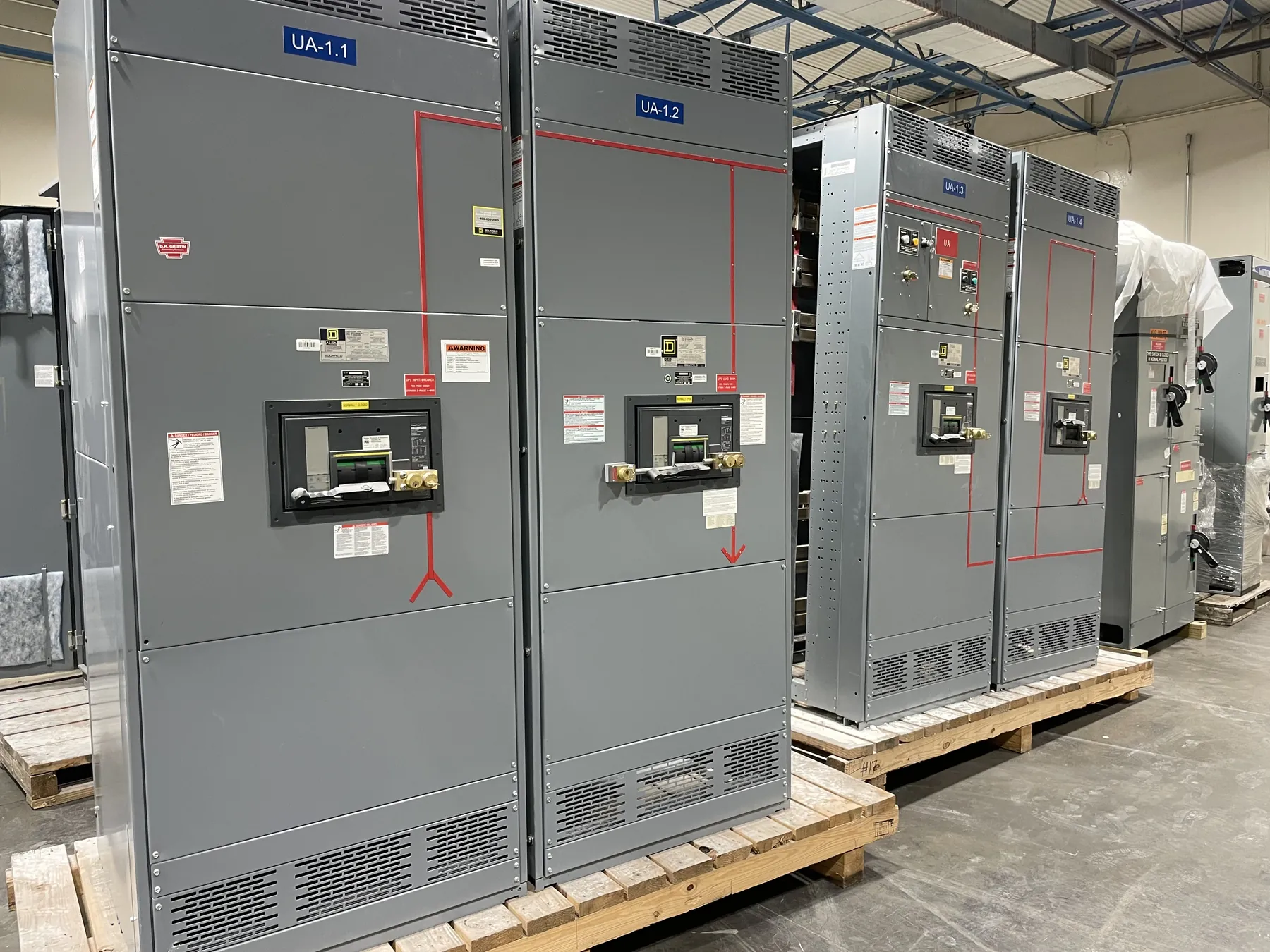
Working Directly With a Switchgear Manufacturer Serving Nevada
Searching for a switchgear manufacturer near you is often about getting clear answers, coordinated engineering and a dependable path from specification to delivery—not simply finding a factory in the same city. We manufacture new custom switchgear and power-distribution equipment in the United States and serve Nevada customers. We do not represent local production, a Nevada office or equipment held in local stock. Instead, customers can communicate directly with the manufacturer about project requirements, design questions and quotation details.
That direct exchange can help clarify what the project actually needs before a configuration is quoted. Switchgear is selected for a particular electrical system and facility; a product description alone cannot establish whether an assembly is suitable. The one-line diagram, project specifications, operating conditions and interface requirements all matter. Qualified electrical professionals should review the design and site conditions before equipment is specified or installed.
What to Prepare Before Requesting a Switchgear Quote
A useful request begins with the documents that define the installation. If available, provide the electrical one-line diagram, equipment schedule, relevant specification sections and the required delivery location. Identify whether the project is new construction, a replacement or an expansion, and describe what existing equipment or downstream systems the new assembly must connect with. For a replacement, dimensions, access constraints and verified existing ratings can be especially important; assumptions based on appearance are not a substitute for equipment records or engineering review.
Include the intended application, system voltage and frequency, required continuous-current and short-circuit ratings, incoming and outgoing feeder needs, and any specified enclosure or environmental conditions. These values are not interchangeable: a component or assembly rating does not by itself state the system voltage or prove suitability for a particular installation. If the design is not yet settled, identify open items rather than guessing. The manufacturer and the project’s qualified engineer can then distinguish confirmed requirements from decisions that still need review.
Design Choices That Affect Configuration and Price
Quotation depends on the complete configuration, not just a broad product name. Relevant choices may include the arrangement of mains and feeders, breaker types and functions, metering, protective devices, control power, communication interfaces, bus arrangement, enclosure details and provisions for future connections. Each choice can influence the equipment layout, materials, engineering work and coordination with other project components. A requested feature should be tied to a defined project need or specification so that the quote reflects the intended design.
Pricing also depends on project-specific ratings, documentation requirements, review scope, manufacturing configuration and delivery arrangements. Comparing proposals is most meaningful when the same drawings, specifications, options and exceptions are used as the basis. If a specification calls for a particular listing or standard, state it explicitly. UL 891 applies to applicable low-voltage switchboards; it should not be treated as a blanket designation for all switchgear or other product categories. Applicable ratings, listings and compliance details require confirmation for the specific assembly and project.
Coordinating Nevada Facility and Site Conditions
Serving a Nevada site does not mean every facility presents the same installation conditions. The project team should identify the equipment-room location, access route, door and ceiling constraints, available working space, environmental exposure and any restrictions on receiving or moving large assemblies. Regional climate, dust, elevation or other site factors may be relevant depending on the actual installation; their significance should be assessed from project documents and site conditions rather than assumed from the state name alone.
Coordinate the proposed equipment dimensions and shipping configuration with the electrical engineer, contractor, facility representative and receiving team. Confirm how the assembly will reach its final location and whether the building or room design imposes limits. The manufacturer can address equipment configuration and shipping coordination, but site access, foundations, clearances, installation planning and system integration remain project-specific matters for the responsible professionals.
Confirming Interfaces, Ratings and Project Responsibilities
Switchgear must work within a larger electrical system. Confirm the interface with the upstream source, downstream loads, transformers, protective devices, metering and control systems. Protection and coordination decisions depend on the system study and project design; they cannot be determined from a general equipment inquiry. Likewise, arc-flash analysis, code compliance, fault-duty suitability and installation requirements need qualified engineering review using accurate system and site information.
Before an order is finalized, align the proposal with the approved project documents. Review the equipment description, ratings, included options, drawings, exceptions, required submittals and shipping assumptions. Ask which items are confirmed and which depend on later engineering approval. This step helps avoid treating a preliminary budget configuration as a final design or interpreting an equipment rating as approval for a complete electrical system.
Direct Communication From Specification Through Delivery
Our U.S.-manufactured assemblies use all-American components, support short lead times and ship nationwide, including to Nevada. Actual timing and shipping arrangements depend on the final configuration, project requirements and order details, so they should be confirmed for each quotation rather than inferred from a general statement. Clear communication about document revisions, review milestones, requested options and delivery location helps keep the manufacturer and project team aligned.
For a productive first discussion, share the project documents, identify the decisions still in progress and name the contacts responsible for engineering, procurement and site coordination. Direct contact with the manufacturer gives your team a practical way to clarify what is being quoted and what information remains necessary. The result is a better-defined procurement conversation—without assuming a nearby factory, local stock or a design decision made without site-specific engineering review.