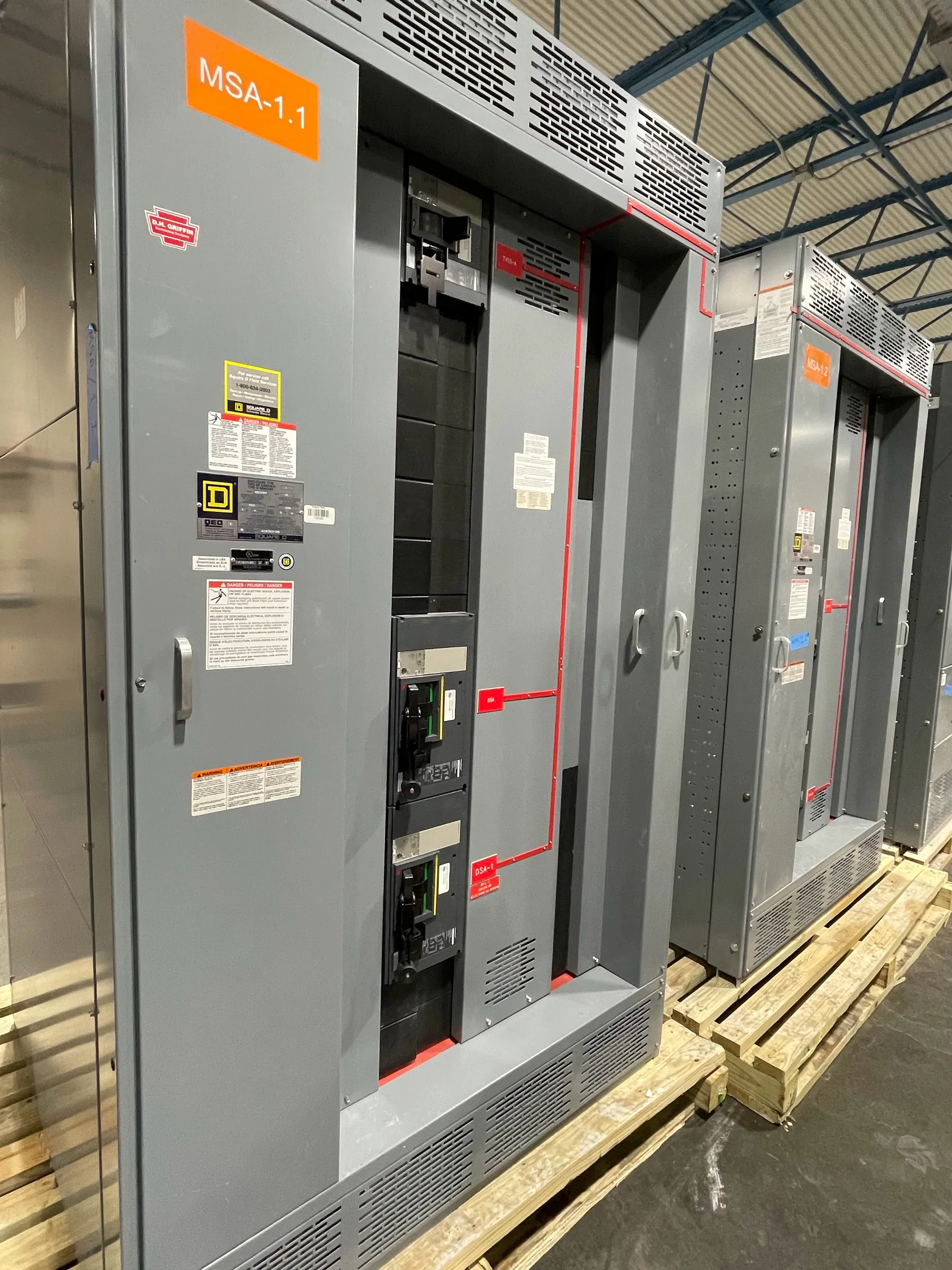
How to Compare Switchgear Suppliers
Choosing a switchgear supplier is a technical and procurement decision, not simply a comparison of quoted prices. A useful evaluation starts with whether the supplier can understand the project, identify the equipment being requested, and explain what is included in its proposal. Ask how the supplier handles custom requirements, documents assumptions, and resolves questions that emerge during engineering. Clear answers make it easier to compare offers on an equivalent basis and reduce the risk of discovering important exclusions late in the process.
First, define the equipment category and application. A low-voltage switchboard, switchgear assembly, motor-control lineup, and medium-voltage equipment are not interchangeable terms or necessarily governed by the same standards. State the intended function, installation environment, and project requirements rather than relying on a general product name. If a supplier’s proposal changes the requested configuration or substitutes a different equipment type, request an explanation and have the project’s qualified electrical engineer review its suitability.
Check the Scope, Ratings, and Documentation
Compare each proposal against the same scope. Look for the equipment lineup and sections, protective devices, metering, controls, accessories, enclosures, and any specified communications or interface provisions. Confirm whether drawings, submittals, and other project documents are included, and identify what must be provided or approved by the customer, engineer, contractor, or utility. A quote that omits an item may appear less expensive without representing the same finished scope.
Review electrical ratings as distinct requirements, not as a single shorthand description. System voltage describes the intended electrical system; equipment ratings address the limits and characteristics applicable to the assembly and its components. Current, short-circuit, insulation, and other ratings must match the design and applicable requirements. Do not assume that one rating establishes suitability for every operating condition. For low-voltage switchboards, UL 891 may be relevant where applicable, but it does not cover all switchgear or other equipment categories. Ask suppliers to identify the standards and listing status applicable to the exact equipment quoted. Confirm those details rather than treating a general company statement as proof that a particular assembly is listed.
Assess Engineering Fit and Interfaces
Supplier capability includes the ability to identify interfaces that affect the complete installation. Consider incoming and outgoing connections, cable entry and routing, grounding provisions, connection to transformers or downstream equipment, control wiring, metering signals, and communication requirements. Space, access, environmental conditions, and the arrangement of nearby equipment can influence enclosure and lineup choices. For a replacement or expansion, existing dimensions and connection points may constrain the design; drawings and field information should be reviewed before the configuration is finalized.
Coordination also matters. Protective-device selection and settings relate to the system design and other protective devices, while arc-flash analysis depends on project-specific electrical information and engineering methods. A supplier should not imply that equipment alone resolves these issues. Establish which party is responsible for providing studies, selecting settings, reviewing interfaces, and approving design documents. Qualified engineers and site review are necessary where project conditions require them.
Compare Quotations on the Same Basis
Pricing depends on the specified equipment, ratings, device selection, materials, enclosure, options, documentation, and project requirements. Customization and the completeness of the information supplied can also affect how much engineering clarification is needed. Ask each supplier to state its assumptions, exclusions, included components, and treatment of requested deviations. If a price differs substantially, investigate whether the proposals use the same scope and ratings before drawing a conclusion.
For a useful quotation, prepare the available one-line diagram, equipment schedule, load and fault-current information, system voltage, required ratings, preferred manufacturer or device requirements, enclosure and installation conditions, and applicable project specifications. Include connection and cable-entry details, control or communications needs, quantity, and requested documentation. Identify any information not yet established so the supplier can flag it as an open item rather than silently assume a value. Final selection and ratings should be confirmed through the project’s engineering and approval process.
Review Schedule, Manufacturing, and Delivery
Ask how the supplier develops its schedule and what milestones depend on receipt of complete technical information, drawing review, and customer approvals. Distinguish an estimated manufacturing interval from shipping and site-receipt timing; neither should be treated as guaranteed unless the written agreement says so. Clarify packaging, shipment coordination, delivery location, and who arranges unloading or site handling. For Nevada projects, confirm that the proposed shipping plan fits the facility’s receiving hours, access, staging space, and installation sequence. These logistics vary by site and should be checked with the project team.
A U.S. manufacturer that builds new custom power-distribution equipment and ships nationwide may suit projects seeking domestically manufactured assemblies. Ask what components and configuration are included in the specific offer, and how design changes are handled. Do not infer a factory location, listing, delivery date, or performance outcome from a broad description; verify project-specific details in the proposal.
Make a Defensible Supplier Decision
Compare suppliers using consistent criteria: scope completeness, engineering responsiveness, applicable ratings and documentation, interface awareness, schedule assumptions, shipping plan, and clarity of commercial terms. Request written answers to unresolved questions and record approved deviations. The strongest choice is the proposal that demonstrably fits the project’s requirements and can be evaluated transparently—not one supported only by a “best” claim. Before ordering, have qualified project personnel confirm the equipment configuration, ratings, listings where applicable, and coordination with site conditions.