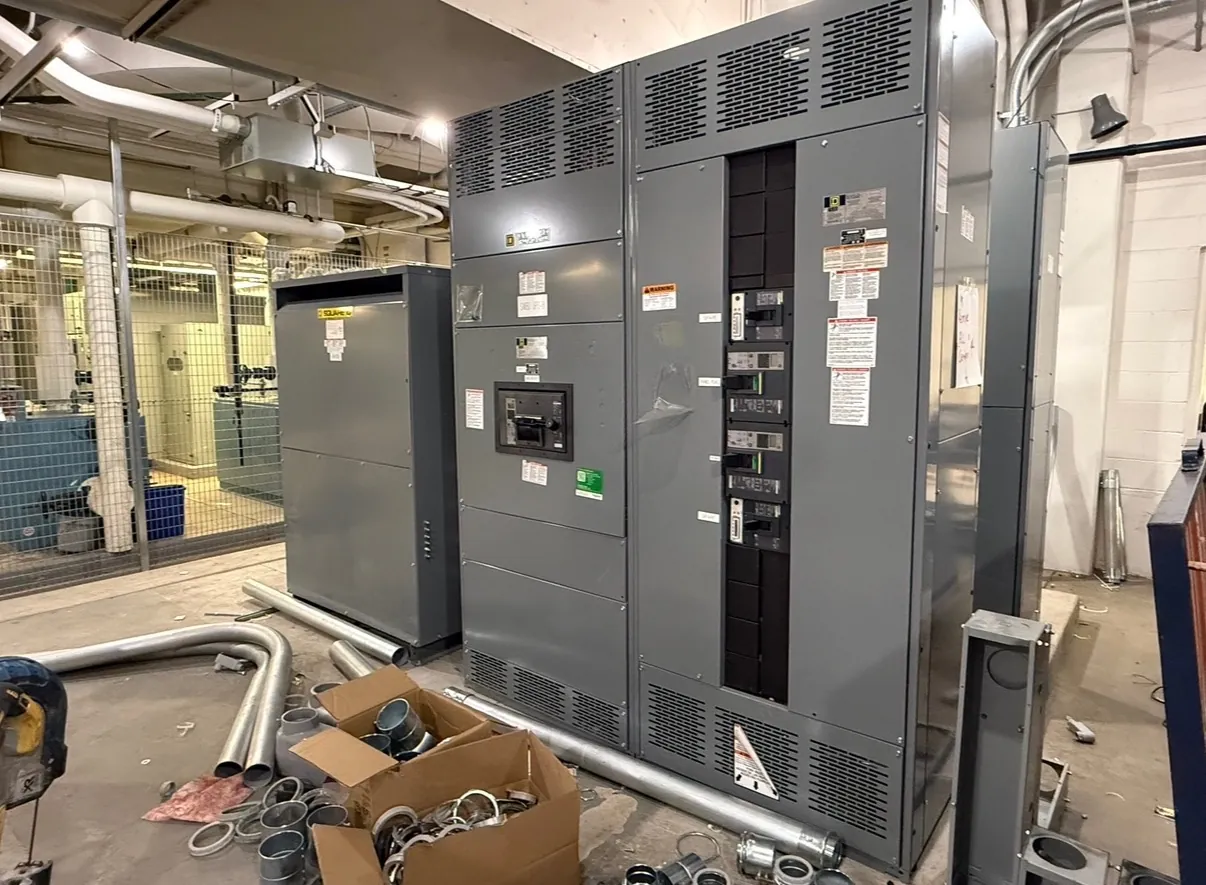
Specifying 347/600 V Switchgear for a Nevada Project
A 347/600 V designation describes a three-phase system with 600 V between phases and 347 V from phase to neutral, when that neutral is present. It is not, by itself, a complete equipment specification. Before selecting a switchboard or related distribution assembly, confirm the actual system arrangement shown in the project documents, the conductors supplied to the equipment, and the loads the assembly must serve. A drawing or equipment schedule that says “600 V” may not establish whether a neutral is required; that detail can affect the bus configuration, feeder conductors and downstream distribution.
We manufacture new custom switchgear and power-distribution equipment in the United States using all-American components. Assemblies can be configured around project requirements and shipped nationwide, including to Nevada. Final equipment selection depends on engineering review of the electrical design and installation conditions, rather than the voltage label alone.
Confirm the System and Neutral Before Choosing an Assembly
Start with the one-line diagram and load schedule. Ask the project engineer to confirm whether the intended source is a 600 V three-phase system, whether a grounded neutral is brought to the equipment, and whether any loads require the 347 V phase-to-neutral connection. A neutral may be essential for some connected loads and unnecessary for others. Its presence also needs to be consistent across the source, switchgear and downstream distribution.
Clarify grounding and bonding requirements with the responsible electrical engineer. The equipment’s neutral arrangement must suit the project’s grounding method and the point at which neutral-to-ground bonding is intended. Do not infer that arrangement from a voltage notation or assume a standard configuration will work for every facility. If the drawings, service description and equipment schedule differ, resolve the conflict before quotation and fabrication.
Separate System Voltage from Equipment Ratings — 347/600 V Switchgear and Distribution
System voltage identifies the electrical system the equipment is intended to serve. Equipment ratings describe the limits and capabilities assigned to particular components or assemblies. These are related, but they are not interchangeable. Confirm the applicable voltage rating for the complete assembly and each specified device, along with current ratings, short-circuit requirements and any other project-defined limits. A nominal 600 V system does not establish those values on its own.
Protection and switching components must be suitable for their application and coordinated with the project design. Interrupting and withstand requirements, protective-device selections, and available fault-current information are among the items the engineer must evaluate. Do not select a device solely because its voltage marking appears to match the system. Equipment ratings and compatibility require confirmation against project documents and site conditions.
Resolve Standards, Listing Scope and Interfaces
Identify the governing project specifications, applicable codes and required equipment standards at the outset. UL 891 applies to applicable low-voltage switchboards; it should not be treated as a blanket standard for every kind of switchgear or distribution product. Whether a particular assembly is required or eligible to be listed to a standard must be confirmed for that product and configuration. No listing, utility acceptance or project approval should be assumed from the 347/600 V designation.
Review the interfaces that can change the build: incoming service arrangement, cable entry direction, conductor space, termination provisions, feeder count, metering requirements, protective devices and connections to adjacent equipment. Confirm enclosure and environmental requirements for the installation location, including available space, access constraints and exposure conditions. Nevada facilities vary by site, so climate, dust, indoor or outdoor placement and building layout should be documented rather than presumed.
Prepare Quotation Inputs That Support a Buildable Design
A useful quotation package helps distinguish required features from open engineering questions. Provide the latest one-line diagram, equipment schedule, project specifications, load information, source data and known installation constraints. Identify whether the neutral is required, how the assembly connects to the source and downstream equipment, and which standards or listing requirements the project specifies. Include requested metering, protective-device functions, enclosure details and any defined coordination requirements.
Also note drawing review and approval milestones, shipping destination, site access limitations and the planned receiving arrangement. These inputs help establish the scope and identify information that needs resolution before fabrication. Lead time depends on the confirmed configuration, component requirements and project review process; it should be discussed against the actual order scope rather than inferred from a general voltage category.
Coordinate Engineering Review Through Delivery
For a 347/600 V assembly, careful coordination begins with agreement on the system, neutral and grounding arrangement, then continues through ratings, protection, interfaces and applicable standards. The qualified project engineer must review the electrical design, available fault-current data and installation conditions. Manufacturer drawings and project submittals should be checked for alignment with those decisions before the equipment is released for manufacture.
Our role is to build new custom equipment to the confirmed project requirements, not to substitute a generic 600 V configuration for site-specific engineering. Clear, consistent documents make it easier to identify unresolved details early and coordinate a suitable assembly for shipment to a Nevada job site.