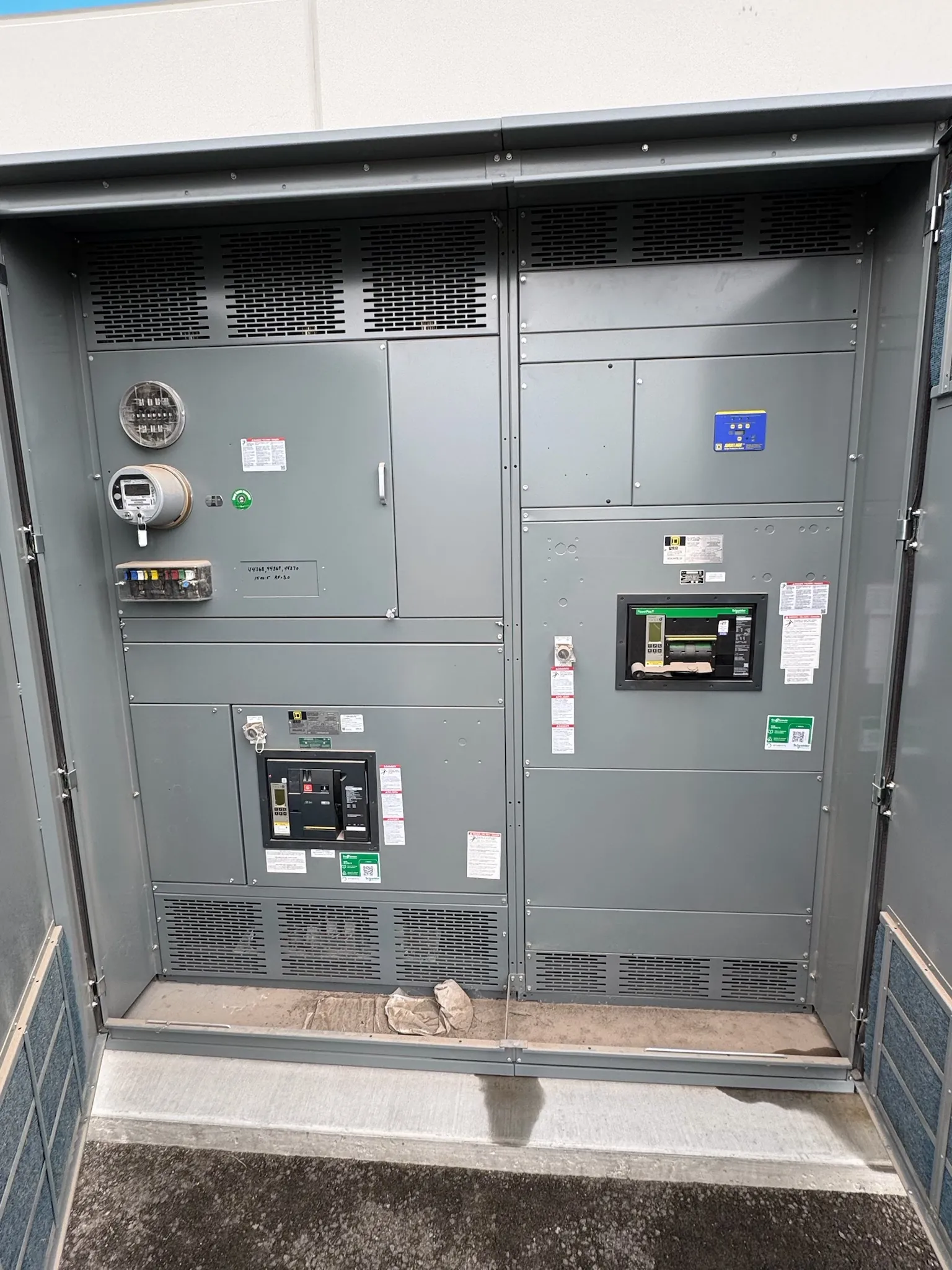
Define the New Equipment and Project
A useful switchgear quotation request describes the equipment’s job, not just its name. Identify whether the Nevada project calls for a low-voltage switchboard, low- or medium-voltage switchgear, or another distribution assembly. State the quantity, intended application and whether the installation is new construction, an expansion or a replacement using new equipment.
We manufacture new equipment in the United States using all-American components. A clear request gives the manufacturing team a basis for discussing the proposed scope and its assumptions. It does not establish final system design: a qualified electrical engineer must verify the electrical requirements and the equipment’s suitability for the installation.
Provide a Current One-Line and Source Details
Include the latest one-line diagram, equipment schedules and relevant sections of the project specification. Identify the incoming source or sources, transformers, main devices, bus connections and outgoing feeders. Show any generator, transfer arrangement or other source that affects how the equipment operates. Include the drawing revision so subsequent changes can be tracked.
State nominal system voltage, phase and wire configuration, frequency, grounding arrangement and neutral needs. If the assembly is at a utility service, identify the service and metering requirements that have been confirmed with the utility. Distinguish verified values from preliminary assumptions, especially when utility information or a system study is still outstanding.
Specify Current Ratings and Fault Duty Separately
Give the required main bus ampacity and the ratings and quantities of incoming and outgoing protective devices. Include the load schedule and any calculated demand or future capacity provisions available from the design team. Spare device positions, spare feeder capacity and physical space for a later extension should be described independently.
Provide the available short-circuit current at the equipment connection point and the required assembly short-circuit rating or duty, with study assumptions where available. State any device interrupting and protective-coordination requirements. The project engineer should confirm the values for relevant operating modes; a high bus ampacity alone does not establish fault-duty suitability.
Describe the Enclosure and Interfaces
Document indoor or outdoor installation, specified enclosure rating, ambient temperature and exposure to dust, moisture or other conditions. Include room or pad dimensions, required equipment access and any known clearance constraints. The final layout must be reviewed against applicable codes and the manufacturer’s instructions for the particular design.
Show cable entry direction, termination needs, conduit locations and any connection to transformers, busway, generators or control systems. List metering, communication, relaying and auxiliary power requirements as applicable. For a replacement, provide verified field dimensions and identify which existing cables or interfaces must be accommodated rather than assuming direct interchangeability.
Identify Documentation, Testing and Schedule
List applicable product standards, project-specific listing requirements and the documentation needed to establish the proposed assembly’s scope and ratings. Ask for the factory inspection and test plan, expected reports and any witness or special acceptance tests. Routine checks of the finished equipment are distinct from design or type-test evidence for the construction.
Provide the desired submittal and delivery schedule, including any known approval or outage milestones. Dates are planning inputs, not guaranteed lead times. The actual schedule depends on design resolution, component requirements, manufacturing arrangements and the agreed order. State whether the requested scope includes documentation, freight or any field support.
Include Nevada Receiving and Review Requirements
Supply the delivery destination and contact responsibilities, along with limits on truck access, unloading, section size, weight and storage. If multiple shipping sections or staged deliveries may be needed, describe the site sequence. These details help evaluate the practical interface between the manufactured lineup and the people receiving and installing it. Include any restrictions on delivery hours and identify the party responsible for moving equipment from the unloading point to its final location.
Review the quotation for equipment configuration, ratings, included tests, exclusions, assumptions and responsibilities. Resolve discrepancies between the proposal and project documents before approving submittals or releasing the order. Installation, field testing, utility approval and energization remain subject to the agreed scope and review by qualified parties and the applicable authority having jurisdiction.