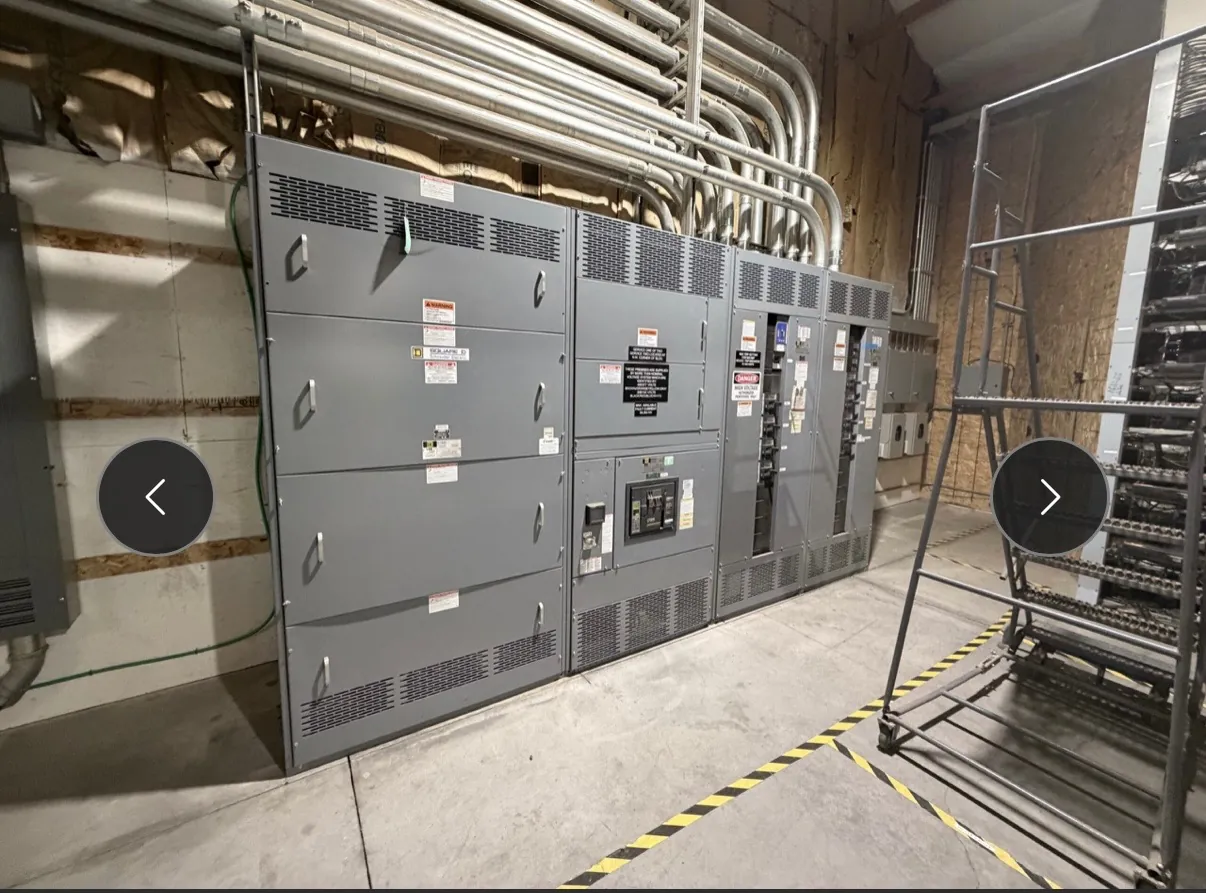
UL 891 Applies to Relevant Low-Voltage Switchboards
UL 891 is a product safety standard for applicable low-voltage switchboards. It is not a blanket standard for every assembly described as switchgear, and it does not establish that medium-voltage equipment is covered. The first step in specifying a product is therefore to confirm what equipment is being designed, its intended application, and which standard and evaluation route apply. A project’s use of the word “switchgear” alone does not settle that question.
For a custom low-voltage switchboard, the applicable construction, configuration, and evaluation need to be considered together. A reference to UL 891 in a specification is useful, but it should not be treated as proof that any particular proposed assembly is listed. The manufacturer and project team should confirm the precise product scope and listing status for the equipment being quoted.
Confirm the Listing for the Exact Proposed Assembly
When a specification requires a UL 891-listed switchboard, request documentation that identifies the manufacturer, product type, and scope of the listing. Compare those details with the proposed equipment configuration rather than relying on a general statement about a product family or a component used inside the assembly. A listing for one arrangement does not, by itself, establish that every custom combination or field modification is covered.
Review the equipment submittal against the project documents, including its intended function and specified ratings. If the proposal includes options, unusual arrangements, or interfaces to other equipment, ask whether those details remain within the applicable evaluated construction. The project’s engineer and the manufacturer should resolve questions about deviations before the design is finalized. Listing status and the acceptability of an installation can depend on details that are not captured by a product name alone.
Keep Voltage, Current, and Short-Circuit Ratings Distinct
Electrical ratings describe different limits and should not be substituted for one another. System voltage identifies the electrical system for which equipment is intended; it is not interchangeable with a current rating or a short-circuit rating. A switchboard’s specified ratings must be suitable for the project conditions and the complete assembly, including its configuration and connected devices. The engineering team should confirm the required values from project documentation and available system information.
Short-circuit withstand or interrupting requirements also call for careful coordination. The rating of a circuit breaker or other device does not automatically establish the rating of the assembled switchboard. Available fault current, protective-device characteristics, equipment arrangement, and the applicable manufacturer documentation all matter. Ratings, listings, and compatibility require confirmation for the specific project; they should not be inferred from a similar-looking assembly or from a single component’s marking.
Choose the Arrangement Around the Facility’s Distribution Needs
Switchboard design begins with the distribution task: incoming service or feeder connections, outgoing circuits, metering needs, protective devices, and provisions for future loads. The number and type of sections, breaker positions, and connection points affect both the physical layout and how the board interfaces with the rest of the electrical system. A compact arrangement may conserve floor space, while additional space or provisions may be useful where the facility expects changes. Those tradeoffs need to be evaluated against actual room dimensions, electrical requirements, and project priorities.
Interfaces deserve particular attention. Confirm the intended connection method and orientation, conduit or cable entry constraints, access clearances, and any coordination with transformers, transfer equipment, generators, or downstream panels. These are project-specific design questions, not details that can be settled by naming UL 891 alone. Site conditions, applicable codes, and the approved electrical design should guide final configuration and installation planning.
Provide Useful Inputs for a Custom Switchboard Quotation
A focused request helps the manufacturer evaluate scope and identify open engineering questions. Include the project specification and one-line diagram when available, along with the required system voltage, relevant equipment ratings, service or feeder arrangement, protective-device requirements, metering needs, and preferred connection locations. Note any required UL 891 listing, unusual environmental conditions, space constraints, or interfaces with equipment supplied by others.
Also identify the project location in Nevada and any known shipping or receiving constraints, such as restricted access, limited unloading capability, or a required delivery sequence. These details help assess logistics without assuming a particular site condition or delivery date. If key electrical information is still under development, mark it as preliminary rather than presenting an estimate as a confirmed design requirement. Final ratings and construction depend on qualified engineering review and the project’s applicable documents.
Manufacturing, Documentation, and Nevada Project Coordination
Custom switchboards are manufactured equipment, not interchangeable catalog descriptions. A U.S. manufacturer can build a new assembly to an agreed project scope using all-American components, with shipment available nationwide, including to Nevada. Short lead times may be supported, but the schedule for a particular order depends on the finalized design, component requirements, documentation, and production planning. A specific delivery date should be confirmed for the project rather than assumed from a general capability.
Before release, align the approved submittal with the requested configuration and verify that the listing evidence, ratings, and interfaces address the project specification. Changes made after approval can affect design coordination, manufacturing, or the documentation needed to establish that the proposed configuration is within scope. The project engineer, manufacturer, and other responsible parties should resolve those effects before proceeding. Clear documentation supports a more predictable review and helps ensure that the delivered switchboard corresponds to the intended low-voltage application.