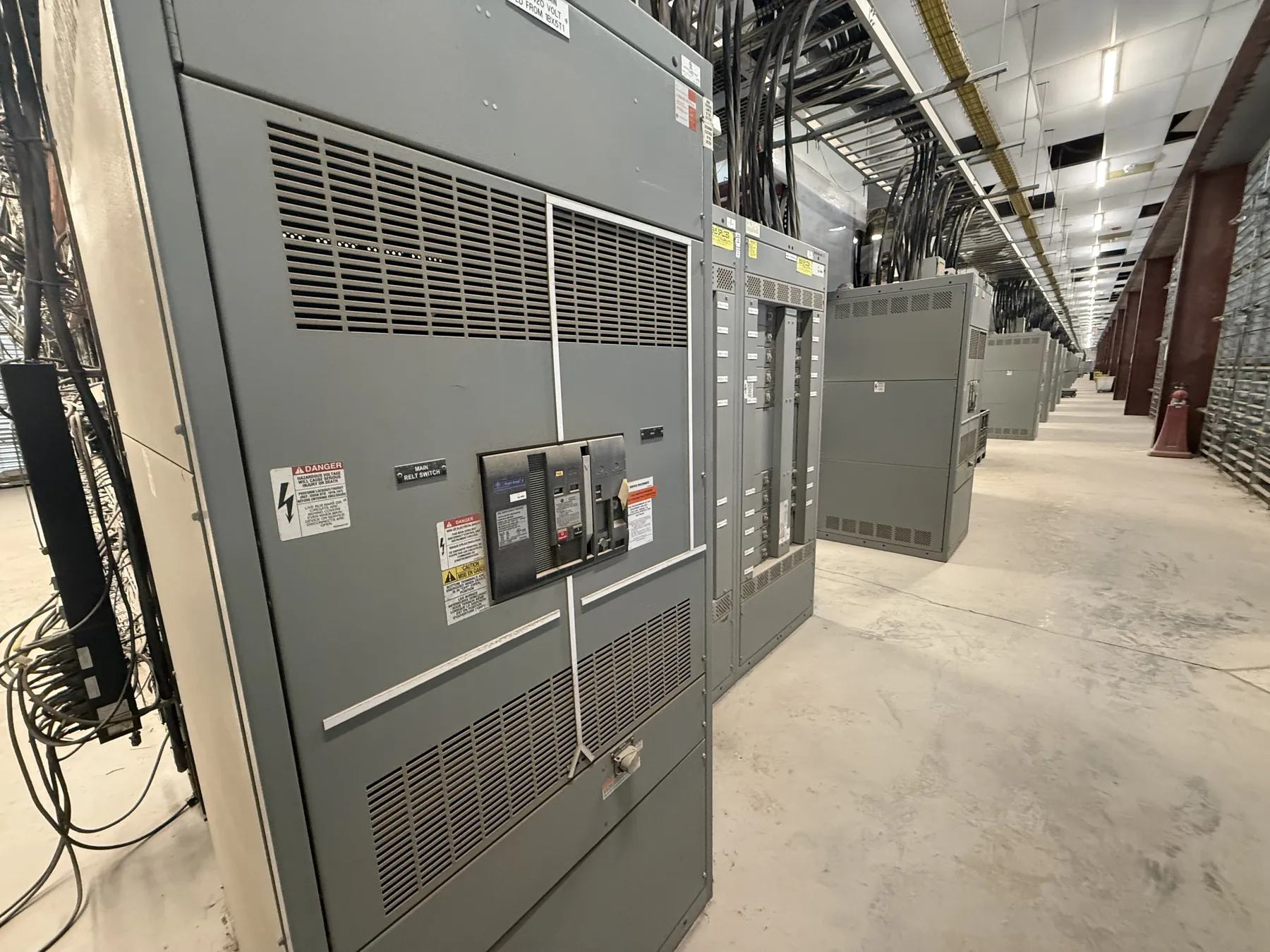
Define What Factory Testing Must Demonstrate
Factory inspection and testing give a project team evidence that new electrical distribution equipment has been assembled and checked against its approved design. The test plan should identify the equipment, drawing revision, applicable requirements and acceptance criteria before fabrication is complete. It should also distinguish a manufacturer's routine checks from additional witnessed or documented tests specified for the particular Nevada project.
Testing is not a substitute for selecting an assembly with the necessary voltage, current and fault-duty capabilities. A qualified engineer should establish those requirements and identify the applicable equipment standard. The U.S. manufacturer and project team can then agree on which inspections, procedures and records are included in the manufacturing scope.
Inspect Construction Before Electrical Checks
A physical inspection can compare the completed lineup with approved drawings and bills of material. Items to check include enclosure dimensions, device placement, barriers, conductor routing, bus supports, labels, terminal identification and access to connection points. The inspection plan should also address fasteners and joints using the specified procedures, as well as signs of damage or contamination that could affect operation.
For control wiring, point-to-point verification can confirm that terminals, contacts and destinations correspond to the schematic. Review of instrument transformer ratios, control power sources and device settings should be limited to what the approved design and test scope actually require. A documented discrepancy process is useful so corrections and any necessary rechecks are traceable.
Separate Routine Checks From Acceptance Tests
Routine factory checks are performed on the individual assembly according to the applicable standard, manufacturer's procedures and agreed scope. Depending on the equipment, those checks may include wiring verification, mechanical operation, insulation-related testing and functional checks. The precise tests and limits must be defined for the construction; not every method is appropriate for every device or assembly.
A project acceptance test is an additional agreed demonstration, such as a witnessed sequence of control operations or a simulated transfer logic check. The team should specify what signals will be simulated, who supplies test settings, what constitutes a pass and whether a customer representative will witness the work. A witnessed test does not automatically broaden the equipment's documented electrical ratings.
Understand Design and Type-Test Evidence
Design or type tests address the capability of a representative design under defined conditions. They are different from routine tests performed on a particular production assembly. Evidence may address matters such as temperature rise, short-circuit performance or insulation, as relevant to the applicable standard. A completed unit should not be described as having undergone a destructive design test merely because the design has supporting test evidence.
Ask how the proposed construction relates to the documented design: bus arrangement, support spacing, enclosure and protective devices can all matter. If a project requires a listed assembly, obtain the listing identification and scope for the actual configuration. A component's mark alone does not establish a listing or fault rating for the entire assembly.
Prepare Usable Test Records
Request a test schedule, relevant procedures, acceptance criteria and a report identifying the unit and drawing revision. Results should record the checks performed, measured values where appropriate, any exceptions, corrective work and disposition. If settings or control logic are provisional, the record should say so. Required calibration records or witness signoffs should be identified in the specification rather than assumed.
When U.S. manufacturing or all-American components are project requirements, define the needed origin documentation separately from electrical test records. Factory test reports establish only what was checked under stated conditions; they do not prove the origin of every part or guarantee field performance after transport and installation.
Connect Factory Results to Field Commissioning
Factory checks occur before shipment, while field commissioning addresses the equipment as installed. Shipping splits, field wiring, grounding, protective settings and connections to utility, generator or downstream equipment may require additional verification. The installation team should inspect for transit damage and follow the manufacturer's instructions before undertaking the tests assigned to its scope.
Coordinate delivery, record transfer and responsibilities with the Nevada project schedule. Qualified personnel must plan safe isolation, test procedures and energization, and the project engineer and authority having jurisdiction should resolve applicable code and inspection requirements. A clear handoff prevents a factory test from being mistaken for completed field acceptance.