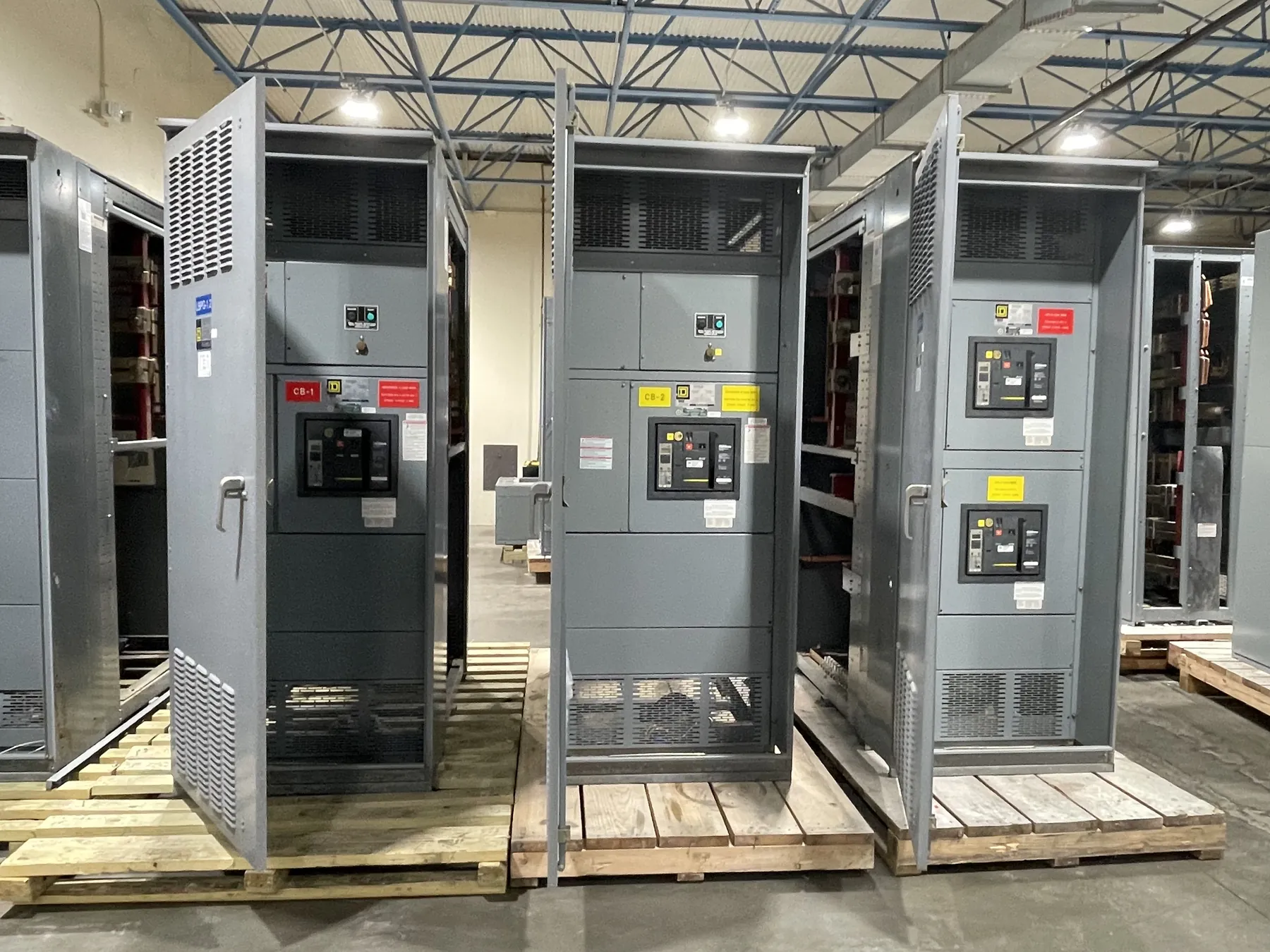
Airport Switchgear Planning for Yerington, Nevada
Airport electrical distribution has to support more than the terminal. A Yerington project may include aircraft-support areas, hangars, maintenance spaces, airfield lighting, communications, security, and site utilities, with operating priorities that differ from one facility to another. A custom switchboard or related distribution assembly should reflect the airport’s actual one-line design, load schedule, operating plan, and expansion outlook—not a generic list of airport loads.
Start by identifying which loads must remain available during a utility interruption, which can be curtailed, and which depend on separate systems. The airport’s electrical engineer and owner can establish those priorities and determine how they affect distribution sections, feeder arrangements, protective-device coordination, and source interfaces. Equipment ratings and configuration require qualified engineering review against the project documents and site conditions.
Define Critical Loads and Source Interfaces
Emergency-power arrangements vary by airport. A project may involve a generator, an automatic transfer arrangement, an uninterruptible power supply, or other equipment specified by the design team. The switchgear or switchboard must coordinate with the selected sources and downstream distribution. Confirm which assembly provides the source connection, where transfer functions occur, what signals or interlocks are required, and which loads are served from each path. Those functions should be defined on coordinated drawings rather than assumed from an equipment label.
Separate essential operational loads from convenience or nonessential loads where the design requires it. For example, airfield lighting, communications, security, terminal services, and maintenance equipment may have different continuity requirements. The owner and design professionals should identify load priorities and applicable operating requirements; equipment selection alone cannot establish airport operational or regulatory compliance.
Plan Phased Outages Around Airport Operations — Airport Switchgear in Yerington, NV
Replacement or expansion work may need to proceed in stages so portions of a facility can remain in service. Before requesting a quotation, describe the intended construction sequence, expected outage windows, temporary distribution needs, and any circuits that must remain available during each phase. Provide existing and proposed one-line diagrams when available, along with switching boundaries established by the project team. This helps identify whether a new assembly can be delivered as coordinated sections and what field connections or interfaces require advance planning.
Outage planning belongs with the airport operator, electrical engineer, contractor, and other responsible parties. They must evaluate system conditions and establish project-specific procedures. The manufacturer can build to documented design requirements but cannot determine a safe work method or approve work on energized equipment.
Reserve Capacity and Physical Room for Growth
For a Yerington airport project, document forecast load growth rather than relying only on present demand. Identify planned building additions, new equipment, anticipated feeder changes, and any loads whose timing or size remains uncertain. Record the spare circuits requested, their intended use where known, and the physical space reserved for future extensions. Electrical capacity and vacant mounting space are different considerations: future plans may require both appropriate bus and protective-device provisions and room for additional equipment.
Future extensions also depend on the assembly’s layout, available floor area, access for installation, and the project’s electrical design. Provide enclosure-location drawings, room dimensions, service and maintenance clearances specified by the design team, and routes for incoming and outgoing conductors. Changes to a future section or feeder should be reviewed for compatibility with the original design rather than treated as automatically interchangeable.
Prepare a Project-Ready Quotation Package — Airport Switchgear in Yerington, NV
Useful quotation inputs include the project one-line diagram, equipment schedule, system voltage, available fault-current information, requested ratings, enclosure and environmental requirements, source and transfer details, feeder quantities, metering needs, and control or communications interfaces. Include the applicable specifications and identify any items still awaiting engineer review. Ratings are not the same as system voltage, and a requested rating does not by itself confirm suitability. Final ratings, listings, and configuration must be checked against the design, site conditions, and applicable requirements.
UL 891 may apply to low-voltage switchboards when specified and appropriate to the equipment. It should not be treated as a blanket designation for all switchgear or for medium- or high-voltage equipment. Confirm the required product category, listing scope, and project documentation with the engineer and manufacturer before specifying an assembly.
Coordinate Delivery and Manufacturing Details
Airport access and receiving conditions can shape how equipment is packaged and delivered. For a Yerington site, share the delivery address, receiving hours, unloading capabilities, gate or escort requirements, access restrictions, and the route to the equipment room. These details help the project team coordinate shipment and installation planning without assuming that a particular vehicle, unloading method, or site access arrangement is available.
Our company manufactures new custom switchgear and power-distribution equipment in the United States using all-American components and ships nationwide, including to Nevada. Short lead times may be supported, but schedule depends on confirmed design information, approvals, materials, and manufacturing requirements; no exact duration should be assumed before review. Early coordination of airport loads, emergency-source interfaces, outage phases, and future spare capacity gives the team a clearer basis for developing equipment that fits the project.