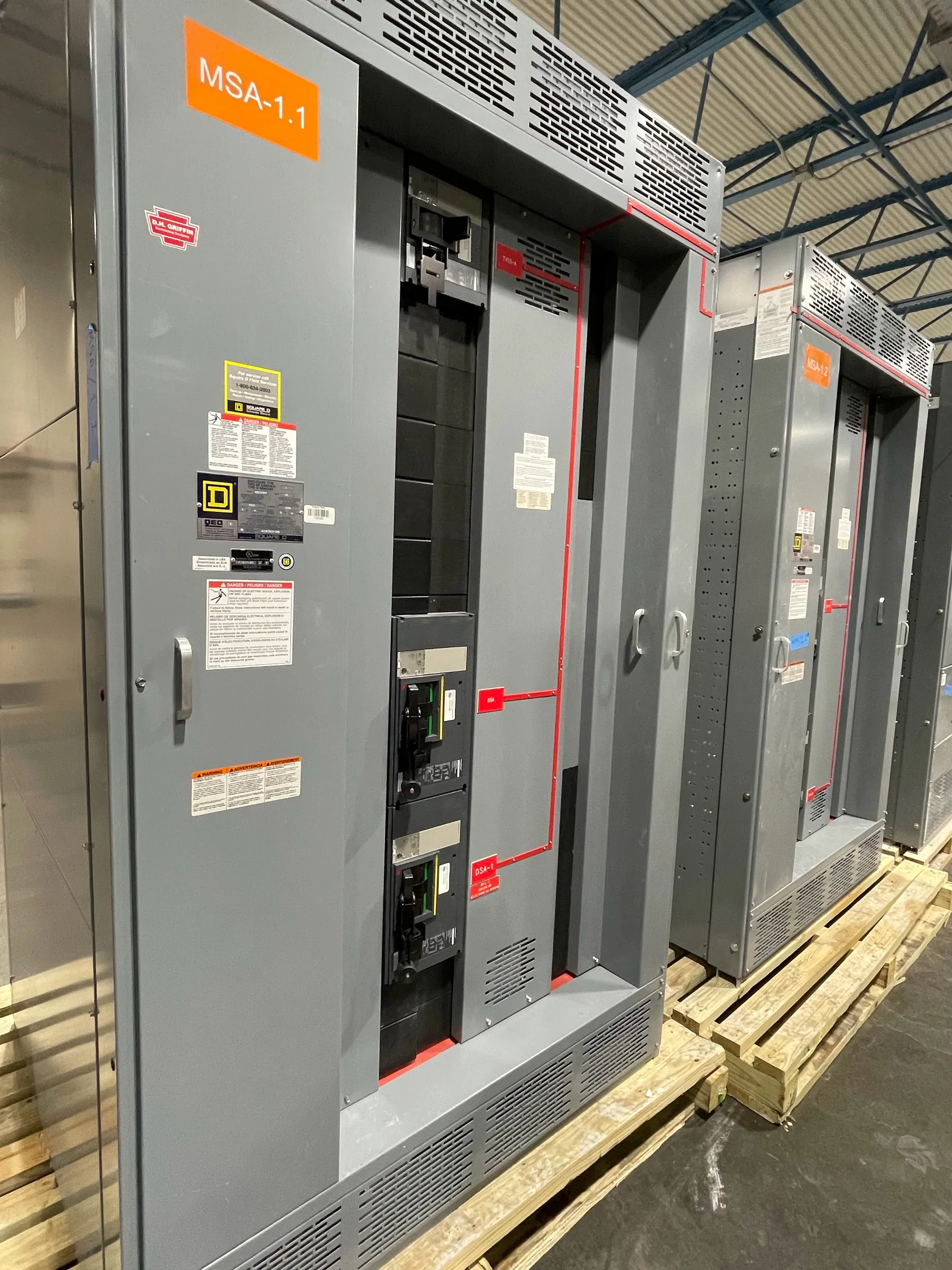
Generator Connections for Tonopah Power Plants
Power-plant switchgear connects generators with the station electrical system, plant auxiliaries and, where applicable, a utility or other power network. The right arrangement depends on how the facility is designed to generate, operate and respond to changing conditions—not simply on a nominal voltage or a list of components. For a Tonopah project, begin with the one-line diagram and define each source, bus section, tie, load and point of interconnection. Custom-built switchgear can be configured around those interfaces, subject to engineering review of the complete system.
Clarify whether generation operates in parallel with another source, serves an isolated plant bus, or changes between operating modes. Identify normal and alternate source paths, intended tie-breaker positions, and loads that must remain supplied during a transition. These decisions affect bus arrangement, breaker selection, control logic, metering and space for future connections. A proposed arrangement should be reviewed against the plant’s actual operating sequences and protection study rather than treated as a standard configuration.
Protection, Synchronization and Backfeed Conditions
Generator breakers and protective relaying must coordinate with the generator, downstream equipment and the connected system. The project team should identify the protection functions required by the generator and interconnection design, how trip signals are exchanged, and which devices provide measurements or status to plant controls. Relay settings and functions depend on equipment data and a qualified engineering study; they cannot be selected from a general product description alone.
Where sources may operate in parallel, synchronization provisions require careful definition. Confirm which device or control system checks the conditions for closing, what permissives are needed, and how breaker status is communicated. Also document possible backfeed paths. A tie, alternate source, generator or stored-energy system can change the direction and magnitude of available fault current, affecting protective coordination and equipment ratings. The one-line, operating narrative and fault-current information should tell the same story before the assembly is finalized.
Auxiliary Loads and Plant Operating Modes — Power Plant Switchgear in Tonopah, NV
Power plants depend on electrical loads beyond the generator output. Pumps, fans, cooling equipment, lubrication systems, controls, lighting and other auxiliaries may have different starting characteristics and continuity requirements. Provide a load schedule that distinguishes essential loads from those that can be shed or restarted, and identify motor-starting methods and any large or variable loads. Those details help engineers assess feeder arrangements, breaker trip units, bus capacity and the effect of starting loads on the plant system.
Describe the operating modes that affect distribution: startup, normal generation, shutdown, source transfer, maintenance and any reduced-output condition. Explain which bus sections should remain connected or separated in each mode. If a control system initiates transfers or load shedding, identify the interface and sequence at a functional level. Switchgear control wiring and compartment layouts must support the approved design, while final logic and protection remain subject to project-specific engineering.
Tonopah Site Conditions and Enclosure Planning — Power Plant Switchgear in Tonopah, NV
Tonopah’s location makes site conditions and delivery access practical design inputs, but the project should use measured or documented facility data rather than assumptions about the city. Confirm actual installation altitude, the specified ambient-temperature limits and whether the gear will be indoors or outdoors. These factors may influence applicable equipment ratings, insulation clearances, enclosure selection, ventilation and any required environmental provisions. The manufacturer and project engineer should review the proposed conditions together before ratings are finalized.
Access deserves the same early attention. Confirm the route from receiving point to the equipment location, door and corridor clearances, floor or foundation constraints, lifting provisions, and whether the assembly must be installed in sections. Remote or restricted sites may also have limited receiving hours or staging space; establish those arrangements with the project team and carrier. These are planning considerations, not assumptions about a particular Tonopah facility or delivery schedule.
Ratings, Construction and Project Submittals
Specify system voltage separately from equipment ratings. Supply available fault-current data, grounding method, frequency, continuous load information, generator data and the required interrupting and withstand capabilities for engineering review. A rating is not a substitute for confirming system conditions, and all ratings, product scope and applicable listings require confirmation for the actual design. UL 891 is relevant to applicable low-voltage switchboards; it should not be treated as a blanket standard for every switchgear assembly or for medium- or high-voltage equipment.
Useful quotation inputs include the current one-line diagram, equipment schedules, site environmental criteria, operating narrative, control and communications interfaces, and the required submittal and drawing review process. Note any specified metering, protective relays, breaker types, cable entry direction, spare provisions and enclosure constraints. Complete information helps identify design questions early without implying that any unreviewed configuration, listing or delivery commitment is already established.
Custom Manufacturing and Delivery to Tonopah
For a new power-plant installation or retrofit, a U.S. manufacturer can build custom power-distribution equipment around the approved project requirements. This manufacturer uses all-American components, builds its assemblies in the USA and ships nationwide, including to Nevada. Lead time depends on the confirmed design, component selection and production requirements; no schedule should be assumed until the scope and project timeline have been reviewed.
Coordinate drawing approvals, interface responsibilities and site access before release for manufacture. The plant’s qualified electrical engineers and other responsible project professionals should verify protection, ratings, code requirements and compatibility with connected equipment. That coordination gives the Tonopah project team a practical basis for specifying generator connections, auxiliary distribution and operating interfaces without relying on generic assumptions.