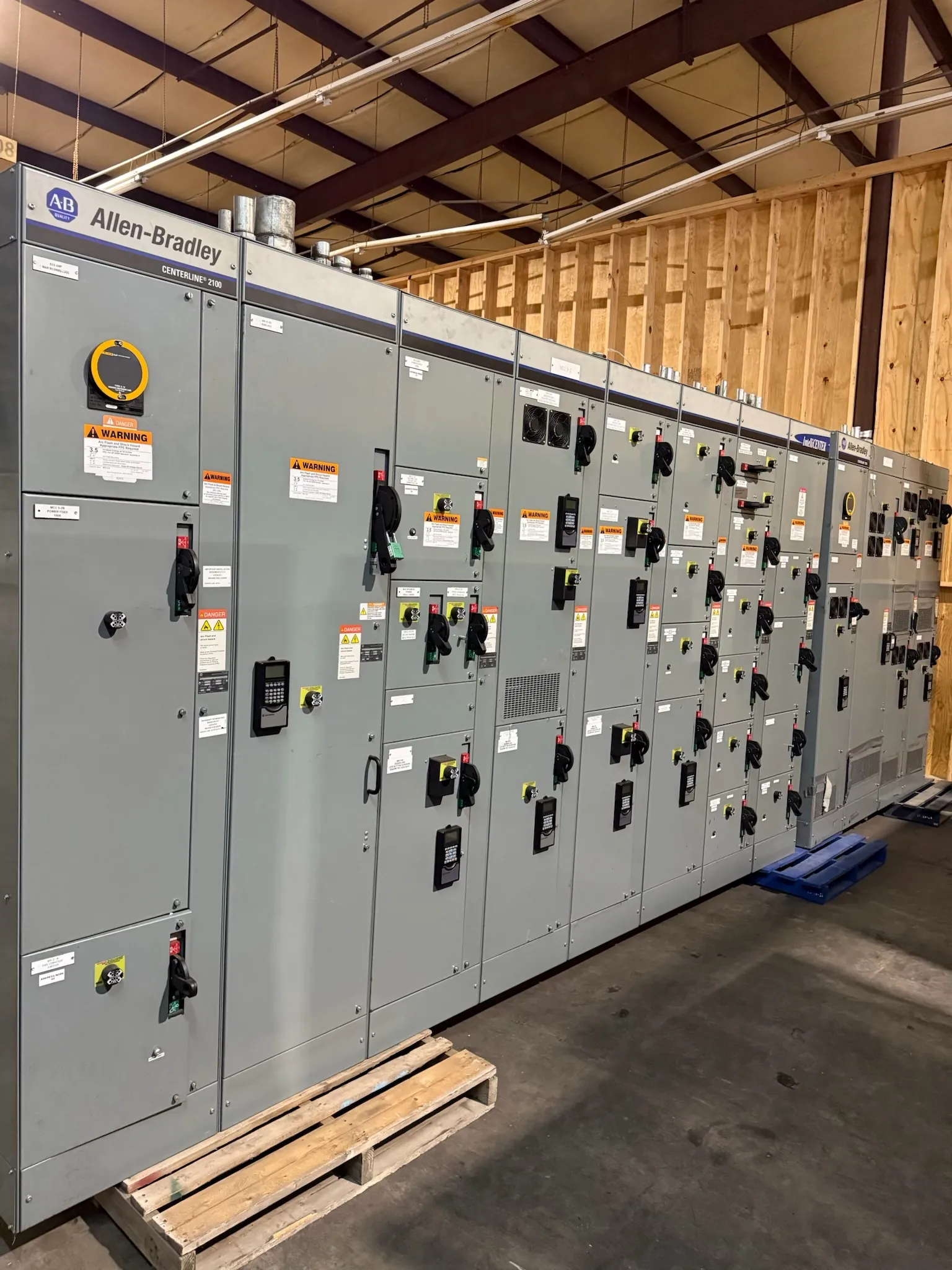
Airport Switchgear for Tonopah, Nevada, Projects
Airport electrical distribution has to support more than the visible terminal or hangar loads. Depending on the facility, essential services may include runway and taxiway lighting, airfield signs, communications, weather equipment, security systems, fuel-facility controls, and building services. The actual load list and operating priorities vary by site, so switchgear configuration should begin with the airport’s electrical one-line diagram, equipment schedules, and an account of what must remain available during a fault, maintenance event, or source interruption. Custom switchgear and power-distribution equipment can be manufactured for new projects and shipped to Tonopah; equipment selection still requires review by the project’s qualified electrical professionals.
Separate Critical Loads from General Airport Loads
Grouping loads by operational consequence helps determine how distribution sections, feeders, and protective devices should be arranged. Airfield lighting circuits may have different control and monitoring interfaces from terminal HVAC or maintenance-shop receptacles. Communications and life-safety loads may require their own distribution approach, while nonessential loads could be managed differently during a constrained operating condition. These functions should not be assumed to share a panel or bus simply because they are at the same airport.
For a quotation, provide the known load schedules, feeder destinations, available fault-current information, and the one-line diagram. Identify which loads are designated essential by the owner or engineer, and describe any required separation, metering, control, or monitoring points. Where the design is not complete, note what remains to be determined rather than relying on estimated ratings as final selections.
Coordinate Emergency Sources and Transfer Interfaces — Airport Switchgear in Tonopah, NV
An airport may use a generator, another standby source, or a separately designed emergency power arrangement. Switchgear interfaces depend on the source configuration and the project’s transfer strategy: equipment may need provisions for a transfer switch, interlocking, control wiring, status signals, or coordination with upstream and downstream protective devices. The source and load behavior, fault-current contribution, grounding arrangement, and control sequence all affect the design.
Clarify whether the switchgear manufacturer is responsible for the distribution assembly alone or whether the project also includes transfer equipment and controls. The engineer should define which loads transfer, how the transfer sequence is initiated, and what indications or remote signals the airport needs. Do not infer that a switchboard rating establishes system voltage, emergency-source suitability, or utility acceptance; those are separate project details that require confirmation.
Plan Phased Outages Around Airport Operations — Airport Switchgear in Tonopah, NV
Replacing or expanding distribution equipment can involve work near systems that support ongoing airport functions. A phased plan may divide work by electrical section, feeder group, or building, but the workable sequence depends on the existing layout and which services can be interrupted. Identify permitted outage windows, temporary power expectations, switching boundaries established by the project team, and any operational restrictions affecting access to electrical rooms or airfield areas.
These details influence assembly arrangement, shipping sequence, equipment access, and field connections. A compact replacement footprint may be important where the electrical room is constrained, while a new installation may allow more space for working clearances and future feeders. Confirm the existing equipment dimensions, cable entry locations, conduit routes, door and corridor clearances, and any limits on moving sections into the building. Outage planning and work methods belong to the responsible airport operator, contractor, and qualified electrical personnel.
Confirm Tonopah Site Conditions Before Finalizing Equipment
Tonopah’s location makes project-specific access and environmental details important, but city-level assumptions are not a substitute for a site survey. Confirm the actual installation altitude and the temperature limits the equipment must meet, along with indoor or outdoor placement, exposure to dust or moisture, ventilation, and enclosure requirements. Altitude and temperature conditions can affect equipment selection or applicable ratings; the manufacturer and project engineer should review the actual conditions before the specification is finalized.
Also verify delivery access from the receiving point to the final installation area. Road and gate restrictions, vehicle turning space, unloading arrangements, building entrances, floor conditions, and any controlled-access requirements can affect section dimensions and shipping configuration. A U.S. manufacturer can ship new custom equipment nationwide, including to Nevada, but the site’s receiving plan and access arrangements should be established by the project team.
Specify Ratings, Construction, and Documentation Carefully
Identify the system voltage, bus and feeder requirements, main-device arrangement, interrupting and withstand requirements where applicable, enclosure type, entry direction, and the expected future expansion needs. Ratings describe equipment limits and must not be confused with nominal system voltage. The responsible engineer should verify the available fault current, protective-device coordination, grounding, environmental conditions, and applicable codes and standards. UL 891 may apply to qualifying low-voltage switchboards; it does not describe every switchgear product or establish that a particular assembly is listed.
For a useful quotation, submit the project specification, latest one-line, schedules, site conditions, target installation sequence, and requested submittal documentation. Note which values are confirmed and which remain subject to engineering review. New equipment built in the USA with all-American components can be configured for the documented application, with short lead times supported where project requirements and production scheduling allow. Final ratings, listing status, scope, and schedule must be confirmed for the specific order.