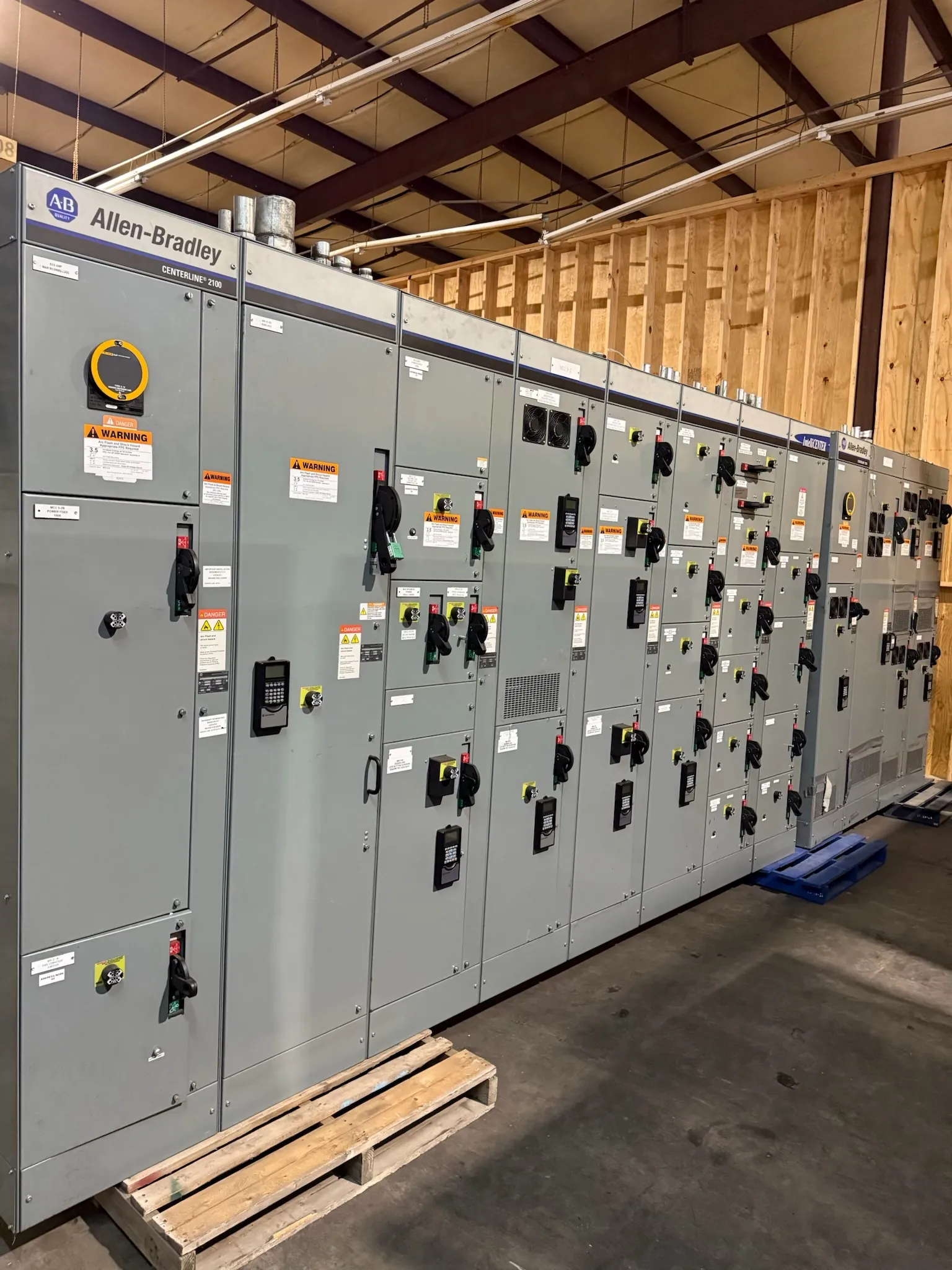
Motor Control Centers for Sparks, Nevada Projects
Motor control centers (MCCs) group motor-control units, feeder devices and related components into an arranged assembly. For a Sparks facility, the right configuration depends on the loads served, the installation environment and the available electrical supply—not simply the number of motors. A purpose-built MCC can be laid out around the project’s process and maintenance needs, with motor starters, variable-frequency drives (VFDs), feeder protection and control interfaces selected to suit the documented requirements.
We manufacture new custom power-distribution equipment in the United States using all-American components. We can ship nationwide, including to Nevada. Project planning should account for the building’s access and installation constraints, such as the route from receiving to the electrical room, doorway and aisle clearances, floor conditions, ventilation and the space needed for future service. These details can affect section arrangement and shipping configuration; they should be reviewed before the design is finalized.
Choose Starters and VFDs Around the Motor Loads
Motor starters and VFDs serve different operating needs. A starter may suit a motor intended to run at a fixed speed, while a VFD can provide adjustable speed and process control when the application and motor are compatible. The choice can influence unit size, heat dissipation, wiring, control strategy and the arrangement of the MCC. Not every motor requires a drive, and a drive should not be specified solely as a general efficiency measure without considering the driven equipment and operating profile.
For each load, provide motor nameplate information, starting method, operating duty, control requirements and any process constraints. For VFDs, identify desired speed range, control signals, communications protocol, bypass requirements if applicable, and any motor or cable considerations identified by the project engineer. Confirm how drive status, faults and commands will interface with the plant control system. These decisions help establish practical unit groupings and avoid leaving important interfaces unresolved.
Establish Short-Circuit Ratings From the Connection Point
An MCC’s short-circuit rating is not the same as the system voltage. The rating must be appropriate for the available fault current at the point where the assembly will connect, and the project must establish the applicable voltage and system conditions separately. For a Sparks project, obtain the available fault current from the responsible electrical engineer or utility information for the actual connection point. Do not infer it from a neighboring building, a general service description or a nominal voltage.
Protective devices and the assembly’s short-circuit rating must be evaluated together under the applicable design requirements. The final selection depends on the fault-current study, upstream protection, equipment configuration and any permitted protective-device combinations. Provide the latest one-line diagram and identify known changes to the service or distribution system. If the available fault current is not yet confirmed, make that an explicit design input rather than treating a preliminary rating as final.
Coordinate Feeder Protection With Downstream Loads
Feeder breakers or other protective devices need to be selected in coordination with the loads and equipment they serve. The review should consider motor characteristics, conductor and equipment requirements, downstream protective devices, starting behavior and the intended coordination objectives. A device selected only by feeder amperage may not address the full system requirements. The engineer should assess how protective devices interact across the distribution path and document any project-specific constraints.
For quotation and engineering, useful inputs include the one-line diagram, load schedule, motor list, connection-point fault-current information, control and communications requirements, environmental conditions, and the desired arrangement of sections and spare spaces. Identify whether the MCC will connect to existing equipment and provide the relevant interface details. Ratings, device selections and protection coordination require confirmation against the project documents and site conditions by qualified professionals.
Confirm Applicable Standards, Including UL 845
Ask the project team whether UL 845 is required for the MCC and how the specification defines the required construction and evaluation. UL 845 applies to motor control centers; it should not be confused with UL 891, which applies to certain low-voltage switchboards. Neither standard should be assumed to cover every assembly or project condition. A requested standard, listing, rating or component combination must be reviewed for the specific product configuration and confirmed before it is represented as applicable.
Also confirm system voltage, bus and unit requirements, enclosure expectations, environmental conditions and any owner or authority requirements. Sparks facilities may have different indoor or outdoor conditions, dust exposure, ambient temperatures and space limitations. Those factors can affect enclosure and ventilation choices, but the appropriate design depends on site review and engineering requirements.
Plan Maintenance Access and Provide Complete Quote Inputs
Maintenance access is a design consideration, not a detail to leave until installation. Review working space, door and aisle clearances, access to removable or serviceable units, cable entry, and the route for handling equipment. The facility team should describe how operators and maintenance personnel need to reach the MCC and whether future expansion is anticipated. Final clearances and access provisions must align with the project design and applicable requirements.
For a focused quotation, send the current one-line diagram, equipment schedule, fault-current data, motor and VFD requirements, control interfaces, site and room constraints, requested standards, and target project milestones. We can use those inputs to define a custom MCC scope and identify open engineering questions. Final ratings, listings, protective-device coordination and installation details remain subject to qualified engineering review and confirmation for the specific Sparks project.