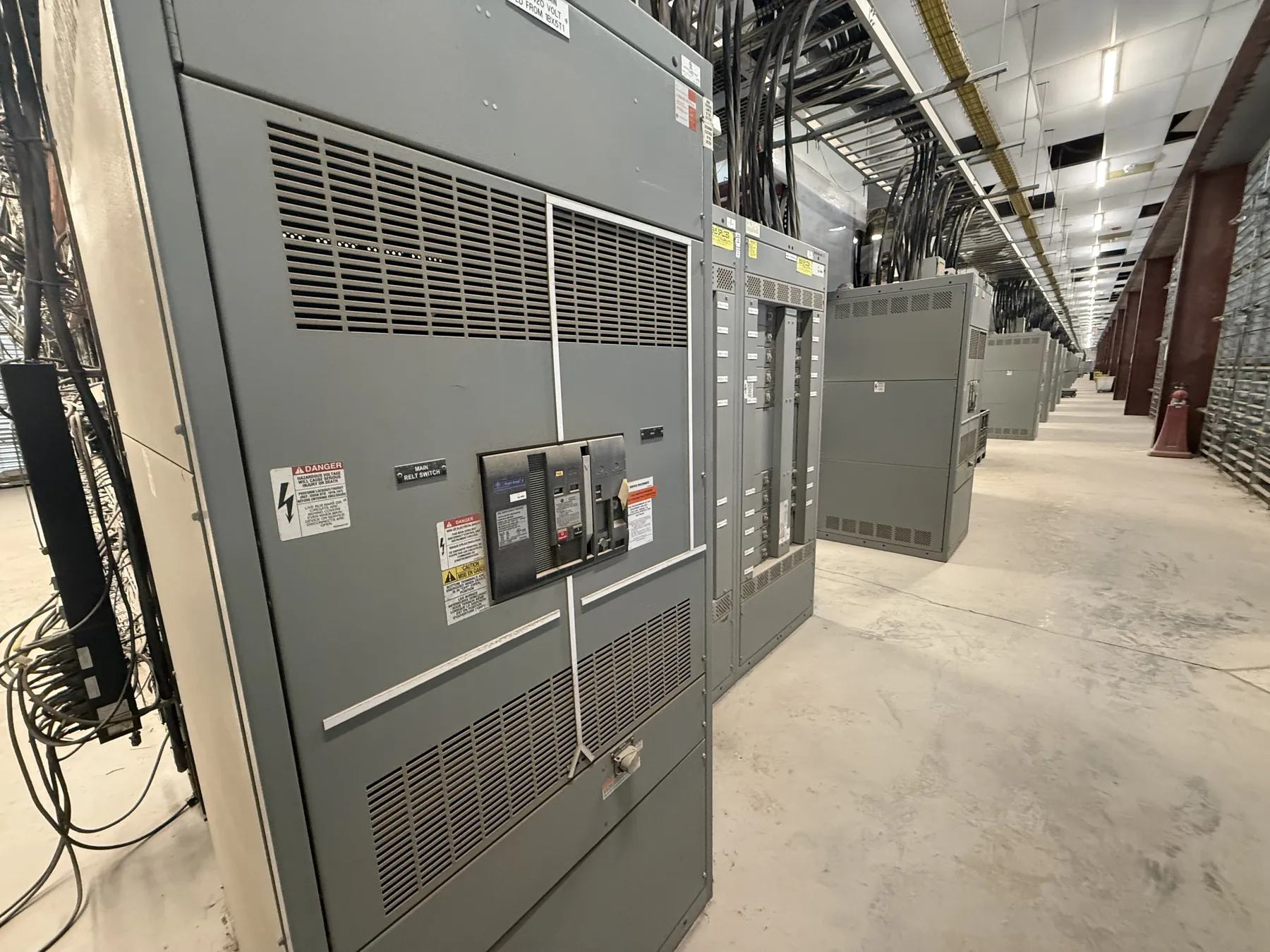
Wastewater Switchgear for Sparks, Nevada Facilities
Wastewater distribution equipment must be selected around the facility’s actual process loads, incoming service, operating sequence, and site environment. For a Sparks project, that means understanding how pumps and motors start, which loads must remain available during a power interruption, and how the equipment connects to existing or planned distribution. A switchboard or other assembly should not be specified from a general description of the treatment process alone. The electrical design, equipment ratings, and applicable requirements need review by qualified project engineers using current site information.
We manufacture new custom switchgear and power-distribution equipment in the United States, using all-American components, for customers in Nevada and nationwide. The equipment configuration is developed from the project’s electrical documents and requirements. Manufacturing lead times depend on the defined scope and project details; they should be confirmed during the quotation and engineering process rather than assumed from a general schedule.
Account for Pump and Motor Loads — Wastewater Switchgear in Sparks, NV
Pump stations and treatment facilities can have several motors with different operating roles. Some may run continuously, others may cycle or operate as standby units, and larger motors may use a starting method or drive selected by the project design. These distinctions affect feeder and protective-device selection, bus and section arrangements, and the way the switchgear interfaces with motor-control equipment. The switchgear should not be treated as a substitute for motor-control design.
For a useful review, provide the motor schedule, load characteristics, starting or drive information, operating modes, and the intended connection points. Identify essential process loads and any sequencing or interlocking requirements that affect distribution. The project team can then evaluate how feeders and protective devices coordinate with downstream equipment. Final selections depend on the complete system design, including conductor details and other loads; a nameplate rating alone does not establish suitability.
Coordinate Standby Power and Transfer Interfaces — Wastewater Switchgear in Sparks, NV
Where standby generation is part of the project, define how normal and standby sources are arranged and where transfer equipment sits in relation to the switchgear. Clarify which loads are supplied during an outage, whether loads are picked up in stages, and what signals or control interfaces are required. Generator capacity, transition behavior, grounding, and protection affect the overall design and must be coordinated across the generator, transfer equipment, switchgear, and downstream distribution.
Standby operation also raises practical questions for wastewater facilities: which pumps or process systems are necessary to maintain the intended operating state, and what happens when available generation cannot serve every load at once? Those are owner and engineering decisions, not assumptions to embed in an equipment quote. Supply one-line diagrams, transfer scheme information, generator data when applicable, and a clear description of the required operating modes so the equipment scope can be defined accurately.
Evaluate Moisture, Corrosion, and Enclosure Conditions
Wastewater sites may include damp rooms, washdown areas, chemical exposure, outdoor installations, or locations subject to condensation. Conditions vary from facility to facility, so an enclosure should be selected for the actual placement and exposure rather than for the industry label. Provide the installation location, indoor or outdoor status, expected moisture or washdown conditions, corrosive agents if known, ambient conditions, and available space. An enclosure rating addresses defined environmental protection; it does not by itself establish resistance to every chemical, flooding condition, or maintenance practice.
Placement also affects access, cable entry, ventilation, and future service clearances. Existing rooms may impose limits on the footprint or require connections to match established raceways and distribution sections. Site review and coordination with the electrical design team help determine whether the proposed arrangement fits those constraints. If conditions are uncertain, document what is known and have the project team resolve the exposure requirements before final equipment selection.
Confirm Fault Current, Ratings, and Protective Coordination
For a Sparks project, obtain the available fault current at the equipment connection point from the responsible electrical engineer or other qualified source. That value, together with system voltage, grounding, protective-device characteristics, and the project’s coordination requirements, informs the appropriate equipment ratings and configuration. Available fault current is not the same thing as a voltage rating, and neither can be inferred reliably from the city or facility type.
Protective devices should be evaluated in relation to downstream loads and the intended system operation. Coordination studies, selective coordination criteria, interrupting ratings, and other project-specific requirements must be addressed by qualified engineers using the complete distribution system. Where low-voltage switchboards are specified, UL 891 may apply to the relevant product category; it should not be read as a blanket standard for all switchgear or other equipment. Confirm the required listing and applicable standards for the actual assembly and project.
Prepare a Clear Quotation Package for Sparks
A complete request helps establish scope without guessing at site conditions. Include the one-line diagram, load and motor schedules, system voltage and grounding, available fault current at the connection point, required equipment ratings, enclosure and installation conditions, feeder and cable-entry information, and any standby-power or control interfaces. Note applicable project specifications, required documentation, and constraints imposed by existing equipment or the installation room. Ratings, listings, and final design details require confirmation during engineering review.
Our custom manufacturing approach supports project-specific configurations, with equipment built in the USA and shipped nationwide, including to Nevada. Short lead times may be possible depending on the design, components, and scope, but timing must be confirmed for each project. Clear technical inputs allow the quotation and engineering teams to address the wastewater facility’s actual loads, environmental conditions, and distribution interfaces.