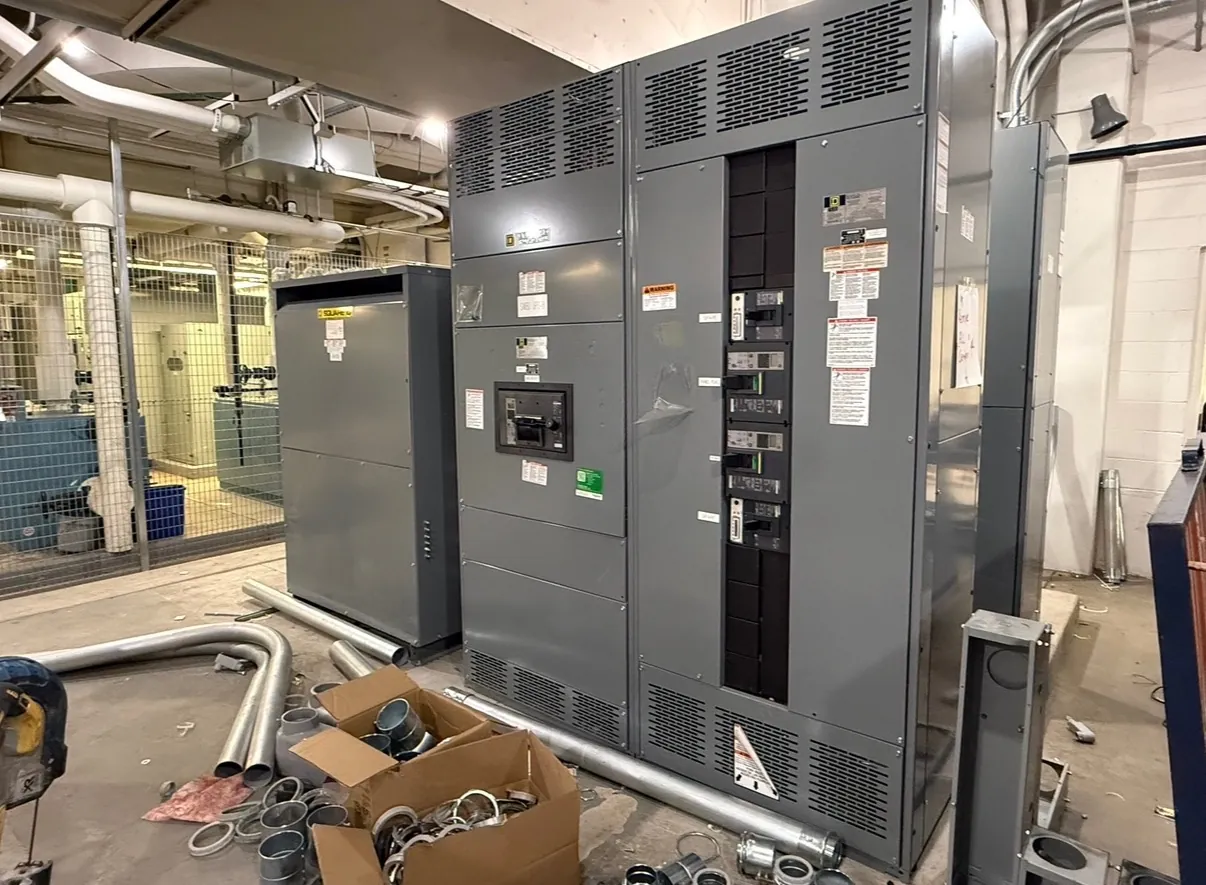
University Switchgear Planning for Sparks Campuses
University electrical distribution serves a changing mix of classrooms, research spaces, housing, dining, libraries and campus infrastructure. A Sparks project may involve a new building, an addition to an existing facility or replacement of equipment within an occupied campus. Each situation calls for a clear view of how feeders, loads and building operations fit together. For custom switchgear and power-distribution equipment, start with the electrical design and the facility’s operating and safety requirements rather than assuming one arrangement suits every campus.
Identify which buildings or systems the equipment will serve, how the proposed distribution connects to existing infrastructure, and what interruptions the institution can accommodate during construction. Research facilities may have loads or operating constraints that differ from offices and classrooms. Housing, food service, IT spaces and central plant equipment can also affect how the project is sequenced. The campus design team should document these conditions so equipment scope and interfaces can be reviewed early.
Campus Feeders, Loads and Available Fault Current
Feeder planning should account for the loads served, the distribution arrangement and the connection point’s electrical characteristics. For a Sparks project, obtain the available fault current at that point from the responsible utility or other qualified source, and provide it to the project’s electrical engineer. Protective-device selection and coordination require that information along with the downstream equipment and system design. It should not be inferred from the city, building size or a panel label.
Ask the engineer to identify normal and anticipated loads, relevant demand assumptions, feeder routes and any planned expansion that should influence the design. Laboratory equipment, ventilation, environmental controls and specialized research systems may have distinct electrical needs. The appropriate equipment rating depends on the engineered system and project conditions; a rating is not interchangeable with nominal system voltage. Final ratings, configurations and applicable listings must be confirmed for the specified assembly and installation.
Laboratories, Research Loads and Metering Interfaces
Laboratories can combine general receptacle loads with dedicated equipment, exhaust and environmental systems, and loads whose operating schedules differ from those in teaching spaces. Provide equipment schedules and design information for major loads, including their intended connections and any relevant operating constraints. The electrical engineer can determine how those loads affect feeder sizing, distribution sections and protective-device coordination. Avoid assuming that every laboratory needs the same metering or distribution arrangement.
Metering requirements are another early design choice. The university may need information for building-level energy tracking, departmental allocation, operational monitoring or other campus systems. Clarify what values must be measured, where the data will be used, and whether communications or integration with a building or campus system are part of the project. Metering devices, interfaces and wiring details should be coordinated with the electrical drawings and the equipment scope. Their inclusion does not by itself establish compatibility with a campus platform.
Protective-Device Coordination and Equipment Ratings — University Switchgear in Sparks, NV
Protective devices need to be considered as part of the complete distribution system, not selected in isolation. The project engineer should review the available fault current, upstream protection, downstream loads and devices, and the intended operating arrangement. That review informs equipment ratings and coordination decisions. Changes to a feeder, transformer, utility connection or downstream device can affect the analysis, so design assumptions should be documented and revisited when the project scope changes.
Specify the required system voltage, continuous current and other applicable ratings separately and have the design team confirm their suitability. UL 891 applies to applicable low-voltage switchboards; it should not be treated as a blanket qualification for every switchgear product or for medium- or high-voltage equipment. Any requested listing, construction detail or project-specific requirement needs confirmation for the actual equipment and application.
Staged Renovation in Occupied University Facilities
Campus renovations often need to coexist with teaching schedules, research activity, building access rules and construction boundaries. Identify which areas must remain operational, when planned interruptions may be considered, and what temporary arrangements the design team is evaluating. These are planning inputs, not a substitute for a qualified engineer’s review or a site-specific safety plan. Do not assume that existing equipment can be connected to new distribution without verifying its condition, ratings and compatibility.
Staging also affects physical interfaces. Confirm equipment-room dimensions, access routes, door and corridor constraints, working clearances, conduit or bus connections, and any building limitations that could shape delivery and installation planning. For a Sparks site, weather, access and the project’s receiving arrangements may be relevant logistics considerations, but actual conditions should be checked with the facility team. Nationwide shipment from a U.S. manufacturer does not establish a delivery date or installation plan.
Information for a University Switchgear Quotation — University Switchgear in Sparks, NV
A useful quotation package gives the manufacturer and project team a defined scope to review. Include the one-line diagram, equipment schedules, specified system voltage and ratings, available fault current at the connection point, protective-device requirements, metering needs, physical arrangement and connection details. Note which requirements are established by the engineer and which remain under review. Also identify the project phase, installation constraints and any required submittal information.
Our company manufactures new custom switchgear and power-distribution equipment in the United States using all-American components and serves projects nationwide. The stated facts do not determine whether a particular design meets a campus specification. Qualified electrical engineers must review the system design, ratings, protective-device coordination, code requirements and site conditions; the equipment scope and applicable listing details should then be confirmed against the project documents.