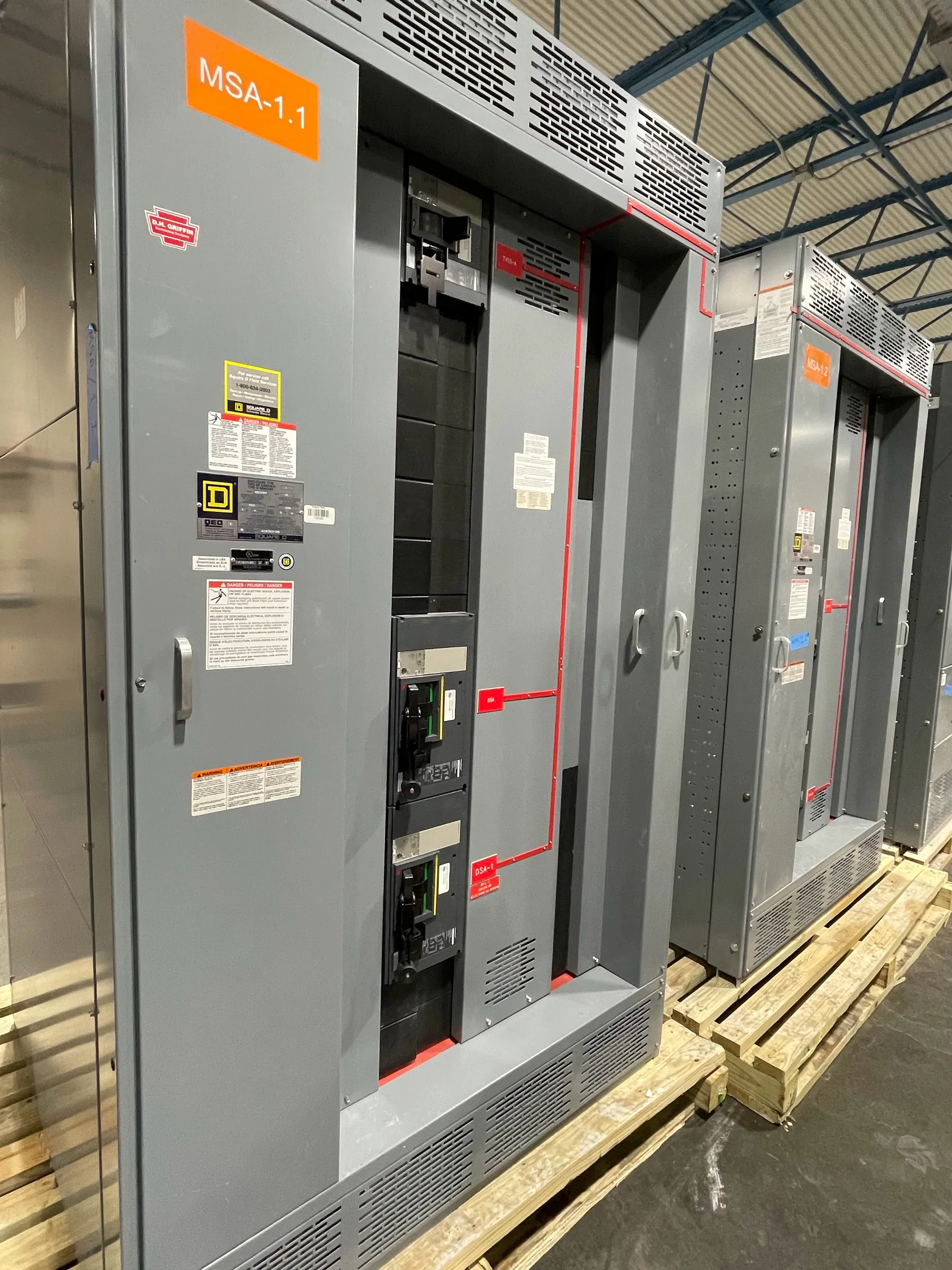
Metal-Clad Switchgear for Pahrump, NV Projects
Metal-clad switchgear is used in power systems where the design calls for compartmentalized equipment and circuit breakers that can be withdrawn from their connected position. For a Pahrump facility, selecting an assembly starts with the electrical conditions at the proposed installation—not simply the nominal service voltage. Service voltage, grounding approach and available short-circuit current at the site all affect equipment configuration and ratings. Those values should be established and reviewed by qualified electrical engineers using project documents and site-specific information.
Our U.S. manufacturing team builds new custom power-distribution equipment with all-American components. Assemblies can be configured around project requirements, with short lead times as a manufacturing objective and shipping available nationwide, including to Nevada. Equipment scope, design details and schedule depend on the application and must be confirmed for the specific project.
Compartmentalization and Equipment Layout
Metal-clad construction separates major components into grounded metal compartments. Depending on the design, compartments may house buses, breakers, instrument transformers, control wiring or cable terminations. This arrangement helps define equipment boundaries and supports organized inspection and maintenance planning; it does not eliminate electrical hazards or replace site-specific safety procedures.
Compartment arrangement influences the lineup’s footprint, access, cable entry, maintenance clearances and how equipment interfaces with the rest of the facility. In Pahrump, project teams should account for the actual electrical-room or outdoor installation conditions, including available floor space, access routes, environmental exposure and connections to upstream and downstream equipment. These details help determine whether a proposed lineup can be installed and serviced as intended.
Withdrawable Breakers and Their Interfaces — Metal-Clad Switchgear in Pahrump, NV
Withdrawable circuit breakers are designed to move between defined positions in a compatible switchgear cell. The breaker, cell, primary disconnects, secondary control connections and mechanical interlocks must be treated as a coordinated assembly. Breaker type and ratings must match the switchgear design; a breaker’s suitability cannot be established from a voltage value alone.
Project specifications should identify the required breaker functions and relevant electrical ratings, along with control power, trip and close circuits, auxiliary contacts and any specified communications interfaces. The design team should also confirm how the lineup connects to cable or bus conductors and whether the proposed arrangement fits the facility’s maintenance and operating plan. Changes to breaker or control requirements can affect cell design, wiring and interfaces, so they should be resolved before equipment details are finalized.
Grounding, Ratings and IEEE C37.20.2
IEEE C37.20.2 is the relevant standard to identify when specifying metal-clad switchgear, subject to the edition and project requirements applicable to the design. The project team should confirm the required scope of conformity and how it applies to the proposed assembly. A reference to the standard does not, by itself, establish that a particular product is listed, certified or suitable for a specific installation.
Grounding decisions need to reflect the actual system. The neutral grounding method, ground-fault protection scheme and equipment grounding connections may affect insulation considerations, protection settings and fault response. Likewise, equipment ratings must be selected for the system’s conditions and available fault duty. Ratings are not interchangeable with nominal system voltage, and all ratings, listing status and design details require confirmation for the specific equipment and application.
Relay Coordination and Protection Scope
Relays and protective devices should be coordinated with the upstream source, downstream loads and other protective equipment in the system. The study depends on reliable information about available short-circuit current, transformer and source characteristics, conductor data, connected loads, operating configurations and existing device settings. Incomplete or assumed inputs can change the coordination outcome.
For a Pahrump project, the engineer should establish the protective objectives, review fault-clearing requirements and identify any constraints imposed by facility operations. Protection settings and equipment selection require qualified engineering review; they should not be inferred from a general product description. If the switchgear will connect to existing equipment, verified interface and protection data are especially important.
Information for a Pahrump Switchgear Quotation
A useful inquiry includes the one-line diagram, service voltage, grounding method, available short-circuit current, system frequency, requested ratings, breaker and relay requirements, control-power details, cable or bus connections, and installation conditions. Share the applicable IEEE C37.20.2 edition or project specification, if identified, and note any required drawings, submittals or interface documents. The engineering team can then clarify scope and identify missing inputs before confirming a configuration.
Shipping can be arranged to Pahrump, but delivery planning depends on the completed equipment scope, transportation requirements, receiving access and site readiness. Provide the destination and any known handling or access constraints when requesting a quotation. Final ratings, standards applicability, listings, interfaces and schedule remain subject to project review and confirmation.