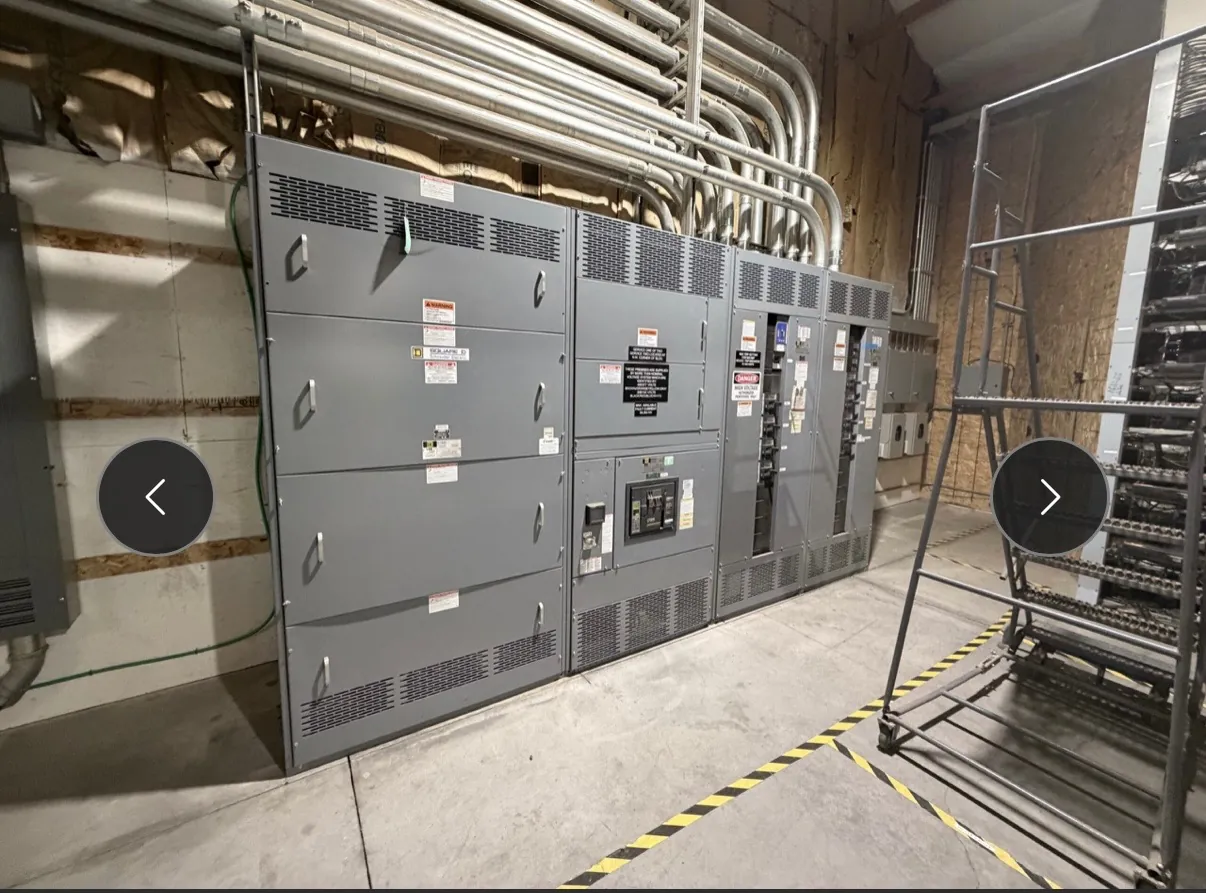
High-Voltage Switchgear for North Las Vegas Substation Projects
High-voltage switchgear for a North Las Vegas project must be selected around the electrical system it will serve, the utility interface and the physical site—not simply a nominal voltage label. The equipment may form part of a substation or another high-voltage installation, where switching, isolation, protection and connection requirements depend on the project design. Our U.S.-built, custom-manufactured equipment uses all-American components and ships nationwide. The exact construction available for a particular application must be confirmed during engineering and quotation; product scope should not be assumed from a general description.
Early planning should establish what the assembly is expected to do, where it sits in the one-line diagram, and how it connects to upstream and downstream equipment. These decisions help define the equipment boundary and identify interfaces that require coordination with the owner’s engineer, utility and other project teams.
Confirm Voltage Classification and Insulation Requirements — High-Voltage Switchgear in North Las Vegas, NV
“High voltage” is not a complete specification. Project documents should identify the system voltage and the required equipment voltage classification separately. The applicable insulation levels and clearances depend on that classification and on the system conditions, installation environment and governing design requirements. A rating cannot be inferred from the service voltage alone, and no one rating should be presumed suitable for every North Las Vegas installation.
For a useful quotation, provide the available one-line diagram, project voltage information, relevant system grounding details and any owner or utility equipment criteria. The engineering team can review those inputs to determine whether the requested construction is within the manufacturer’s available scope and what additional information is needed. Final selections require qualified engineering review and confirmation against the project documents.
Coordinate Protection and Utility Interconnection
Switchgear protection must be coordinated with the broader power system. The design team should identify the intended protective functions, instrument-transformer requirements, control interfaces, relay responsibilities and relevant fault-current information. Utility interconnection requirements may also affect the arrangement, metering provisions, switching duties and division of responsibility between utility-owned and customer-owned equipment.
Provide the utility’s current interconnection criteria and any approved or in-review drawings that define the point of connection. Clarify which party supplies relays, controls, metering components and interface wiring. These details can affect the lineup arrangement and the scope of manufacture. Applicable IEEE or IEC requirements should be identified by the project engineer and confirmed for the specific equipment type and jurisdiction; neither a standard reference nor a product description establishes that an assembly is listed, approved or compliant for a particular installation.
Plan Cable Routes, Clearances and North Las Vegas Access
Before fixing lineup dimensions, map incoming and outgoing cable routes from the equipment to their termination points. Show entry direction, trench or duct-bank locations, cable approach space and any constraints that affect bending or termination. A layout that appears workable on a floor plan may need revision if cable paths conflict with structural elements, adjacent equipment or the intended maintenance area.
Working clearances and access requirements must be established from the applicable design, code and site conditions by qualified project professionals. For a North Las Vegas facility, share a dimensioned equipment-room or substation plan, door and gate openings, unloading approach, floor or pad information, and any route restrictions between the delivery point and final position. These inputs support practical layout and shipment planning without assuming a particular facility, site condition or delivery arrangement.
Choose Construction and Interfaces Around the Installation
Construction details depend on the specified voltage class, insulation approach, installation environment and operational requirements. Confirm whether the project calls for indoor or outdoor equipment, the desired lineup configuration, cable or other connection interfaces, control-power provisions and any environmental or enclosure requirements. Available construction must be checked against the actual application rather than inferred from a generic high-voltage product label.
Other equipment in the substation can constrain the interface: transformers, bus connections, grounding provisions, control buildings and communications systems may all influence arrangement or scope. Provide interface drawings and identify the party responsible for each connection. Changes made after dimensions and interfaces are fixed can affect engineering and manufacturing coordination, so unresolved items should be clearly marked in the bid package.
Prepare a North Las Vegas Project RFQ
A complete request for quotation helps distinguish required features from assumptions. Include the one-line diagram, voltage and insulation requirements, utility criteria, applicable IEEE or IEC references, protection and control scope, site layout, cable-entry information, environmental conditions and target project milestones. Identify required submittals and any project-specific inspection or documentation requirements. Ratings, listings and all other project details require confirmation; applicable UL 891 coverage is for low-voltage switchboards and should not be applied to high-voltage switchgear.
We manufacture new custom power-distribution equipment in the United States and ship nationwide, including to North Las Vegas. Lead time depends on the confirmed scope, engineering inputs and production requirements, so it should be established for the specific quotation. A coordinated package gives the project team a clearer basis for evaluating construction, interfaces, layout and schedule before the equipment is released for manufacture.