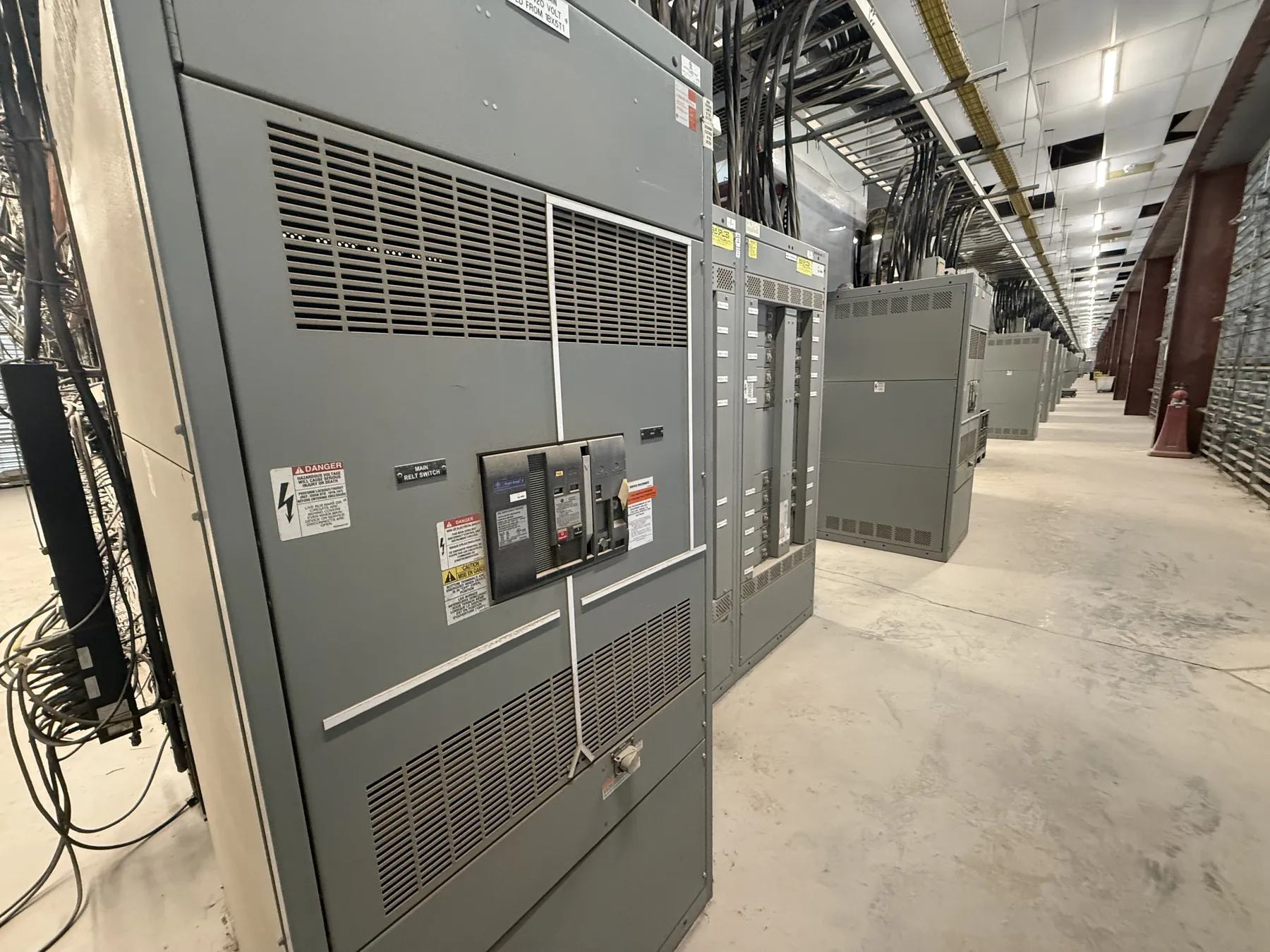
Industrial Switchgear for Gardnerville Facilities
Industrial electrical distribution in Gardnerville must be designed around the work a facility performs, not simply the nameplate voltage of its incoming service. A switchboard or switchgear lineup may supply process equipment, motor control centers, variable-frequency drives (VFDs), building loads, or a combination of these. Those loads place different demands on distribution equipment, so the lineup’s configuration, ratings, protection and connections should follow a project-specific electrical design.
We manufacture new custom power-distribution equipment in the United States using all-American components. For Gardnerville projects, we can discuss a purpose-built configuration and ship equipment nationwide. Final equipment selection depends on qualified engineering review of the site, the electrical system and applicable project requirements; product ratings, listings and configuration must be confirmed for the particular application.
Motor Starting and VFD Load Characteristics
Motor loads affect more than feeder size. Starting method, frequency of starts, motor horsepower, acceleration requirements and the number of motors operating at once can influence feeder arrangements and protective-device selection. Across-the-line starting can create a different electrical demand than reduced-voltage starting or a VFD, and the design should reflect the actual operating sequence rather than assume every motor starts independently.
VFDs introduce additional considerations, including drive input characteristics, harmonic effects, bypass arrangements and the way upstream protection coordinates with drive manufacturer requirements. A bypass may preserve a mode of operation in some designs, but it also changes the circuit arrangement and must be evaluated with the process and maintenance plan. Provide drive schedules and relevant manufacturer information early so the engineer can review the distribution interface and avoid treating drives as generic loads.
Duty, Fault Current and Protective Coordination
Equipment duty must be checked against the available fault current at the point of installation. That value depends on the utility source, transformers, conductors and other system characteristics; it cannot be inferred from nominal system voltage alone. A project may require a specific short-circuit current rating or interrupting capability, but the appropriate values and their relationship to the overall system require engineering confirmation.
Protective coordination is also a system question. Fuse and circuit-breaker selections, trip settings, upstream devices and downstream loads affect which device responds to a fault and how much of the facility may be interrupted. The engineer needs current one-line diagrams, source and transformer data, conductor information, protective-device details and available fault-current data to evaluate coordination. Changes to the source or distribution layout can affect those conclusions and may require renewed review.
Gardnerville Site Conditions and Placement
Gardnerville’s elevation and the actual installation environment should be included in equipment review. Confirm site elevation and ask the design team whether it affects equipment ratings, cooling or other specified performance. The installation location matters as well: indoor electrical rooms and outdoor equipment locations have different exposure, enclosure and access requirements.
Document ambient conditions, ventilation, dust, moisture, corrosive exposure, temperature range and available working space as applicable. For outdoor placement, identify the enclosure and environmental requirements established by the project design rather than assuming a general-purpose enclosure will suit the site. Indoor placement still needs adequate room for the lineup, cable entry, heat management and required access. Site conditions and applicable codes should be reviewed by qualified professionals.
Interfaces, Layout and Expansion Planning
A custom lineup must connect cleanly with the facility’s service and downstream distribution. Useful design inputs include the incoming source arrangement, bus configuration, feeder count, cable or bus connections, metering needs, control interfaces and physical entry direction. Confirm room dimensions, doorway and rigging constraints, conduit locations and preferred cable routing before finalizing the arrangement. These details can shape section layout and reduce conflicts during installation.
Where future expansion is anticipated, identify likely additions and reserve space or connection provisions only after engineering review. Spare capacity is not a substitute for documenting future load, fault-duty and protection requirements. For an operating facility, provide the existing one-line diagram and identify planned changes so the proposed equipment can be evaluated in the context of the complete distribution system.
Information for a Gardnerville Switchgear Quote
A useful quotation request describes the application and supplies the documents needed to define the equipment—not merely a requested ampere rating. Include the system voltage and frequency, service and grounding arrangement, load schedule, motor and VFD data, available fault-current information, protective-device requirements, indoor or outdoor location, site elevation and environmental specifications. Add one-line diagrams, room or equipment-layout drawings, connection preferences, applicable project specifications and the required listing or standard, if specified.
UL 891 applies to relevant low-voltage switchboards; it should not be treated as a blanket standard for every switchgear product or voltage class. Confirm the appropriate equipment type, ratings and any required listing with the project engineer. Our U.S.-manufactured assemblies support short lead times, but schedule depends on the finalized design, component selections and project requirements. Shipping can be arranged nationwide, with Gardnerville delivery and site logistics coordinated against the project’s access and receiving conditions.