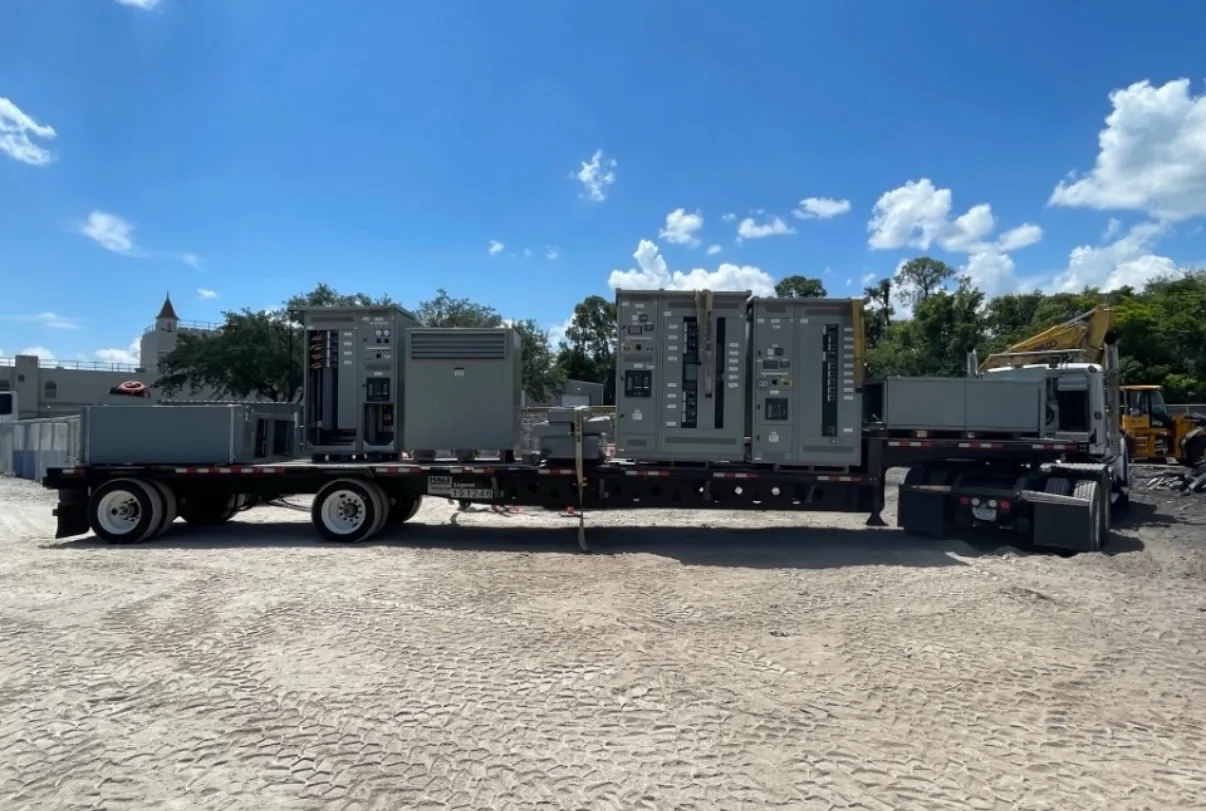
Airport Switchgear for Sparks, Nevada Projects
Airport electrical distribution has to support a mix of safety-related functions, passenger services, airfield systems and commercial operations. For a Sparks-area airport project, the right switchgear configuration depends on which loads must remain available, how power sources are arranged and what work can be accommodated within the facility’s operating schedule. A custom assembly should be developed from the project’s electrical documents and site conditions—not from a generic airport equipment list.
We manufacture new custom switchgear and power-distribution equipment in the United States using all-American components, with short lead times and nationwide shipping. Equipment can be configured to project requirements, subject to engineering review and confirmation of applicable ratings, listings and scope. We do not assume that a particular assembly is suitable for every airport, utility service or operating environment.
Identify Critical Loads and Their Power Paths
Begin by separating loads according to operational consequence and required source. Depending on the facility, these may include terminal systems, communications, security, baggage handling, airfield lighting, navigation-related support, fire and life-safety systems, maintenance areas, and tenant or concession loads. The airport’s electrical engineer and operating team should determine which loads require continuity, which can tolerate interruption, and which are served by dedicated systems outside the switchgear scope.
That load assessment informs distribution sections, feeder arrangements and space for future circuits. It also helps prevent unrelated loads from being grouped in a way that complicates maintenance or recovery after a fault. Where airport systems have distinct ownership or operational control, document the boundary between airport distribution, tenant equipment and other facilities. Final circuit allocation and design require qualified engineering review.
Coordinate Emergency Sources and Transfer Interfaces — Airport Switchgear in Sparks, NV
Emergency generators, alternate utility feeds, uninterruptible power systems and transfer equipment may all appear in an airport distribution architecture, but they do not perform interchangeable roles. Confirm which sources are included in the project, where transfer functions occur, and which loads each source is intended to serve. Switchgear may provide an interface or distribution point without containing the transfer equipment itself; that distinction should be clear in the one-line diagram and equipment scope.
Source characteristics, grounding arrangements, operating sequences and interlocking requirements must be reviewed as a system. Where a generator or other alternate source connects to distribution equipment, the design team must resolve applicable source coordination and prevent unintended operating conditions. A manufacturer can build to an approved specification, but cannot establish the site’s source arrangement or sequence from the equipment request alone.
Plan Phased Outages Around Airport Operations — Airport Switchgear in Sparks, NV
Airport electrical work often needs to fit around operating windows, restricted areas and dependencies between systems. Before selecting a lineup or defining replacement boundaries, identify which distribution sections can be isolated independently, what temporary arrangements the project team will provide, and which loads cannot be interrupted during a planned phase. These are project-planning questions for the airport, contractor and electrical engineer; equipment layout should support the approved plan rather than substitute for it.
Phasing may affect section grouping, feeder routing, access to terminations and the sequence in which equipment is installed or connected. Existing rooms can impose constraints such as limited working space, door and corridor clearances, overhead obstructions, floor loading, environmental conditions and routes for moving equipment. For a Sparks site, confirm the actual building and access conditions directly; regional climate or location alone does not establish indoor conditions or installation requirements.
Use Available Fault Current to Coordinate Protection
For a Sparks project, obtain the available fault current at the proposed connection point from the responsible utility or qualified project engineer. Confirm the system voltage, grounding method, source configuration and equipment location associated with that value. A current rating or interrupting rating is not the same as system voltage, and one cannot be inferred from the other.
Protective devices must be coordinated with downstream loads and upstream protection using verified project data. Review device types and settings, transformer information, conductor details, motor and other load characteristics, and the study assumptions applicable to the installation. Changes to the source, feeder lengths or connected equipment can affect the analysis. Equipment ratings, any required listing and coordination results need confirmation against the final design and applicable requirements; no rating should be presumed suitable before that review.
Prepare a Project-Ready Equipment Request
A useful quotation package typically includes the latest one-line diagram, equipment schedules, specified system voltage and ratings, available fault-current information, source and transfer interfaces, feeder quantities, enclosure and room conditions, connection details, control requirements, and the intended phased outage boundaries. Include project specifications and identify deviations or open design questions. If details are preliminary, label them as such so they are not mistaken for approved requirements.
Also provide delivery-site constraints relevant to shipment and installation, such as receiving hours, access restrictions, unloading arrangements and any limits on equipment dimensions or sectionalized delivery. Nationwide shipping can support Nevada projects, but site access, installation sequence and final configuration must be coordinated with the project team. These inputs help establish a buildable scope and allow engineering review to focus on the airport’s actual electrical and operational needs.