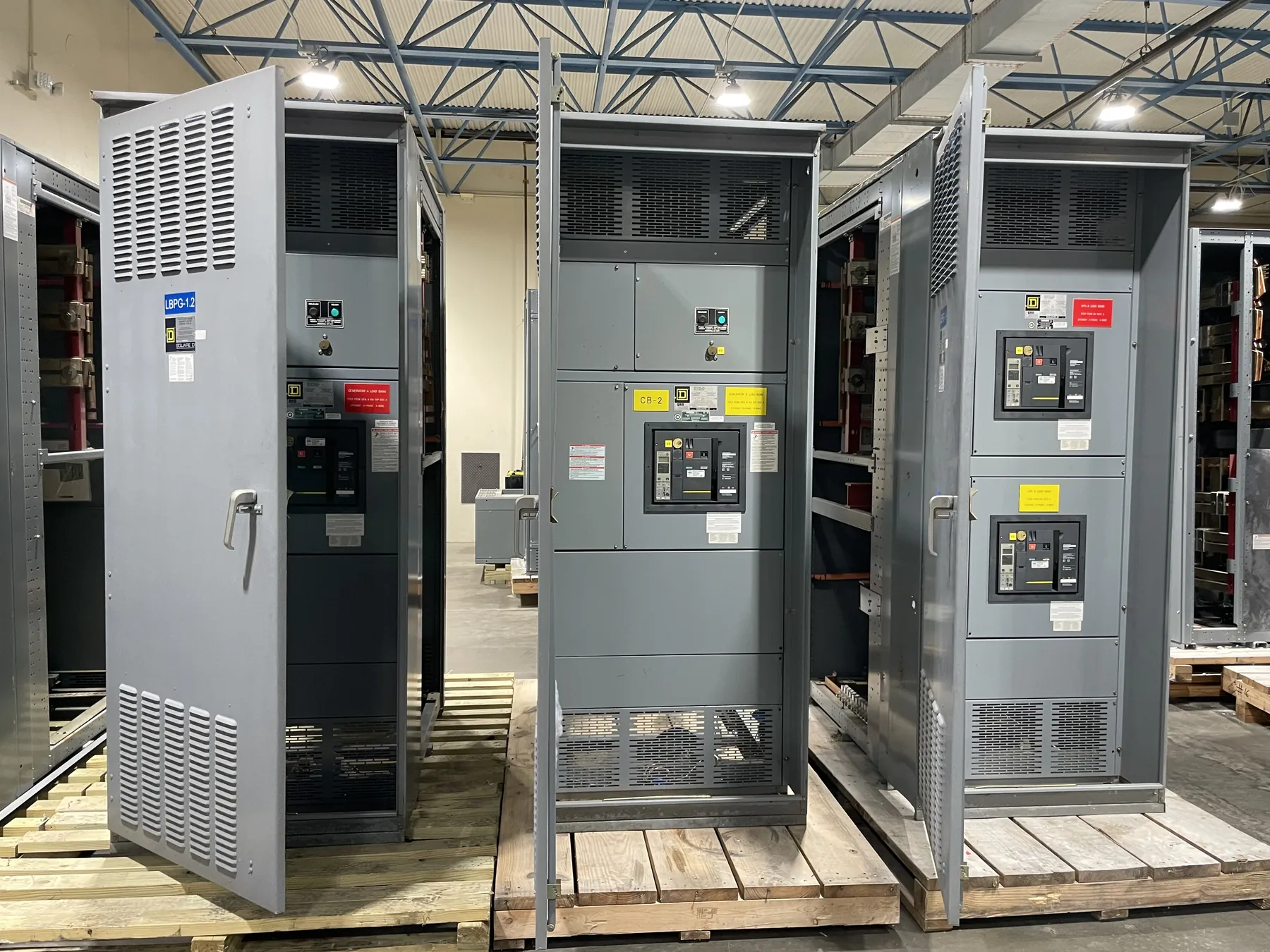
High-Voltage Switchgear for Sparks Substation Projects
High-voltage switchgear is selected as part of a coordinated substation design, not by voltage label alone. For a Sparks project, the equipment configuration must suit the utility connection, system operating conditions, protection scheme, available space and the loads it serves. We manufacture new custom power-distribution equipment in the United States using all-American components and ship nationwide, including to Nevada. The exact high-voltage construction available for a project must be confirmed during engineering review; suitability depends on the application and required specifications.
Early planning should identify whether the work involves a new substation, an expansion, replacement equipment or an interface with existing gear. Those situations can call for different arrangements, connection points and outage constraints. The project team should establish who is responsible for the utility-side interface, equipment boundaries and final acceptance requirements before defining a quotation scope.
Voltage Classification, Insulation and Equipment Construction — High-Voltage Switchgear in Sparks, NV
Specify the system’s nominal and maximum operating voltage separately from equipment ratings. A rating is not, by itself, confirmation that an assembly is appropriate for a particular system. Engineering review must account for the applicable voltage class, insulation levels, grounding arrangement, switching duties and conditions at the installation point. Insulation requirements also depend on the project’s specified withstand levels and the applicable design basis; they should not be inferred from a general voltage description.
High-voltage substation equipment may use different switching and insulating technologies, and construction options are not interchangeable. The required configuration depends on the one-line diagram, switching functions, environmental conditions, footprint, maintainability expectations and utility criteria. Provide the intended arrangement and required functions so available construction can be evaluated rather than assuming a particular technology or enclosure style.
Fault Current, Protection and Downstream Coordination
For a Sparks project, obtain the available fault current at the proposed connection point from the responsible utility or project engineer. This information is essential to evaluating equipment duties and protection settings; an assumed or outdated value can undermine the design basis. Confirm the study assumptions, including relevant system configurations and any planned changes that could affect fault levels.
Protective devices must be coordinated with downstream loads and other protective equipment. That review can involve relay functions, instrument-transformer requirements, trip interfaces, device operating characteristics and the behavior expected during abnormal conditions. The correct settings and device selection require qualified engineering analysis using the actual system model, load information and utility requirements. Equipment should not be specified as though a switchgear rating alone establishes selectivity or protection performance.
Utility Interconnection and Project Interfaces in Sparks
Interconnection requirements can influence equipment layout, metering, protection, communications and demarcation between utility and customer facilities. Confirm the serving utility’s current requirements directly with the project team and utility representatives. Identify who supplies and approves interface components, which protection signals must be exchanged, and what drawings or studies are needed for review. Utility approval should not be assumed from a product description or general equipment rating.
Site conditions around Sparks also matter. Record the available substation footprint, access route, foundation and cable-entry constraints, ambient and exposure conditions, and any restrictions on equipment placement or delivery. Weather exposure, dust, elevation and seismic design criteria should be evaluated against the site-specific design requirements, not addressed through assumptions based only on city location. Existing facilities may add clearance, tie-in or outage limitations that affect construction and sequencing.
Applicable IEEE or IEC Requirements — High-Voltage Switchgear in Sparks, NV
Identify the standards basis required by the owner, utility and project jurisdiction. IEEE or IEC requirements may apply to different equipment functions and design considerations; they are not interchangeable labels for an entire installation. The specification should name the applicable editions and clarify which requirements govern switchgear, switching devices, insulation coordination, protection, testing and interfaces. UL 891 concerns applicable low-voltage switchboards and should not be presented as a certification for high-voltage substation switchgear.
Ratings, listings, tests and compliance documentation must be confirmed for the exact construction and project scope. A standards reference does not establish that a particular assembly is listed, certified or accepted by a utility. The engineering team should resolve applicable requirements before release for manufacture.
Information for a High-Voltage Switchgear Quotation — High-Voltage Switchgear in Sparks, NV
A useful quotation package includes the one-line diagram, system voltage and grounding details, available fault current at the connection point, required insulation levels, protective-device and relay requirements, downstream load information, utility interface criteria, site conditions and applicable standards. Include requested switching functions, connection details, metering or communications needs, drawings, and any project schedule constraints. If information is preliminary, identify it as such so open engineering items remain visible.
Our team can review the requested scope, clarify which construction is available and identify details requiring confirmation before manufacture. Short lead times are supported, but timing depends on the final configuration, engineering inputs and project requirements; a specific schedule must be established for the order. This approach helps Sparks project teams define equipment that fits the documented electrical design and site interfaces without treating generic ratings as a substitute for qualified engineering.