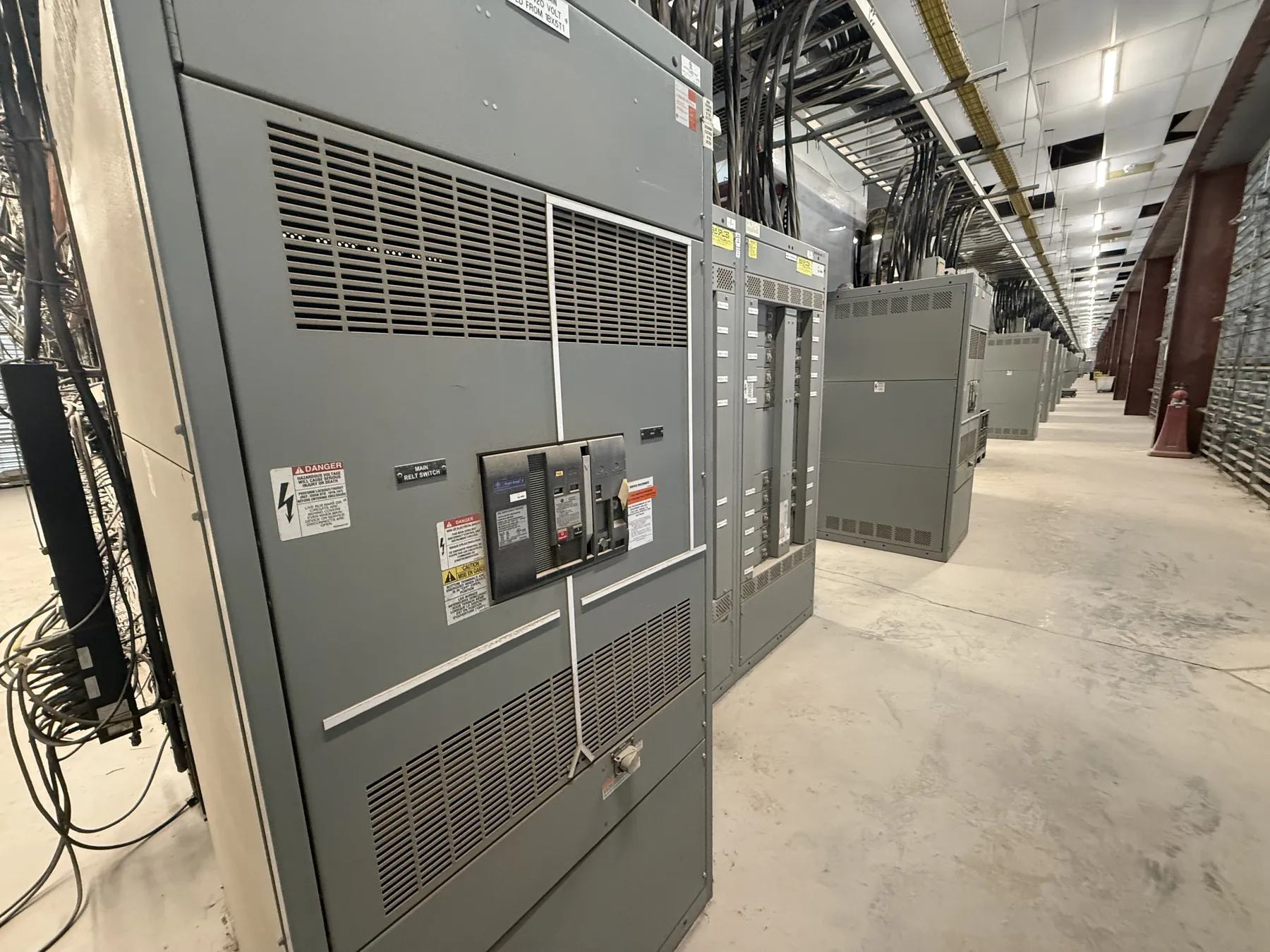
High-Voltage Switchgear for Ely, NV Substation Projects
High-voltage switchgear is part of a coordinated substation system, not a standalone selection based on a voltage label. For an Ely-area project, the equipment designer must establish the system voltage, operating conditions, insulation requirements, fault duty and switching function before a construction can be specified. These details affect the arrangement of the switchgear, its interfaces with transformers and other substation equipment, and the protection scheme. We manufacture new custom power-distribution equipment in the United States and sell manufactured assemblies to customers; the exact high-voltage construction available for a project must be confirmed during technical review.
Early coordination is especially useful when the switchgear is one element in a larger utility or facility expansion. A project team can identify which functions belong in the switchgear assembly, which are supplied by other equipment, and which requirements come from the serving utility or owner. This helps avoid treating a preliminary voltage designation as a completed equipment specification.
Voltage Classification, Insulation and Ratings
Project documents should distinguish nominal system voltage from equipment voltage class and from individual ratings. They are related but not interchangeable. The designer must confirm the applicable system conditions and specify insulation levels appropriate to the application, including the required withstand performance and the coordination of insulation with the broader substation design. The selected construction and insulating medium can also influence clearances, enclosure arrangement, maintenance provisions and site layout.
Ratings require the same careful treatment. Continuous-current, short-circuit and switching-related requirements depend on the system and the equipment’s intended role. A rating cannot be inferred from a system-voltage value alone, and a catalog designation is not enough to establish suitability for a particular installation. Final ratings, listings where applicable, and project details must be reviewed and confirmed by qualified engineers against the design basis and applicable requirements.
Protection and Utility Interconnection
Protection and control are coordinated across the substation, not selected in isolation. The project team should identify the protective devices, instrument transformers, relays, trip and close circuits, and control interfaces required by the design. Coordination with upstream and downstream protection helps determine how the switchgear is expected to respond to system faults and abnormal conditions. Communications, metering, remote-control points and interlocking requirements may also affect the control compartment and wiring scope.
For a utility interconnection, the serving utility’s current technical criteria and review process are key inputs. Confirm required connection points, protection functions, metering arrangements, communications, grounding interfaces and any specified equipment requirements before equipment scope is finalized. Utility acceptance is not implied by a manufacturer’s proposal; the owner and project engineers remain responsible for obtaining applicable utility review and approval.
Applicable IEEE or IEC Requirements — High-Voltage Switchgear in Ely, NV
Applicable standards depend on the equipment type, voltage class, construction and project jurisdiction. IEEE and IEC documents address different equipment categories and technical requirements, so a specification should name the applicable standard and edition rather than broadly requesting “IEEE/IEC compliant” equipment without clarification. The design team should determine which standard governs the switchgear and which related requirements apply to relays, instrument transformers, insulation coordination, enclosure design and testing.
UL 891 applies to certain low-voltage switchboards; it should not be treated as a general listing standard for high-voltage switchgear. Any requested listing or conformity documentation must be evaluated for the specific product and scope. Applicable standards, test requirements and documentation should be settled during engineering review, not assumed from terminology in an early request for quotation.
Ely Site Conditions and Equipment Derating — High-Voltage Switchgear in Ely, NV
Site conditions can change the required design or available ratings. For an Ely project, provide the installation altitude, expected ambient temperature range, exposure to sun, dust or moisture, and whether the equipment will be indoors or outdoors. The equipment designer must assess altitude and ambient conditions and determine whether insulation coordination, cooling, enclosure details or rating derating is required. Do not assume a standard rating remains unchanged at the project site.
Layout and operating context matter as well. The site plan should show equipment clearances, cable or bus connections, grounding provisions, access for installation and maintenance, and interfaces with foundations and adjacent apparatus. These details help establish whether a proposed arrangement is practical for the facility and whether additional project-specific construction is needed.
Information for a Project-Specific Quotation — High-Voltage Switchgear in Ely, NV
A useful quotation package includes the one-line diagram, system voltage and grounding information, available fault-current data, required continuous and short-circuit ratings, insulation requirements, protection and control scope, applicable standards, utility criteria, site conditions and preferred equipment arrangement. Identify what is owner-furnished or supplied by other vendors, including transformers, relays, instrument transformers, cables and communications equipment. If a requirement is preliminary, mark it as such so the design team can identify open items rather than treating an assumption as final.
Our U.S.-built assemblies use all-American components, support short lead times and ship nationwide, including to Nevada. Schedule depends on confirmed scope, engineering, component requirements and project approvals; no exact lead time should be assumed before review. A technically complete submittal and timely resolution of utility and engineering comments help move the project toward a coordinated final design.